
Yesterday we ventured farther west in the Tjoritja/ West MacDonnell National Park. We got up extra early and drove about 90 minutes to get to the Ellery Creek Big Hole before the tour buses. Success! We had the whole place to ourselves until a young woman arrived to do some yoga on the sand. We stayed longer than we had planned to because it was so beautiful and peaceful–my favorite nature spot yet on this trip. I wish I could bottle the feeling of sitting there watching the water ripple and the birds stopping by for a drink and take it home with me. The pictures just don’t do it justice, but here they are:
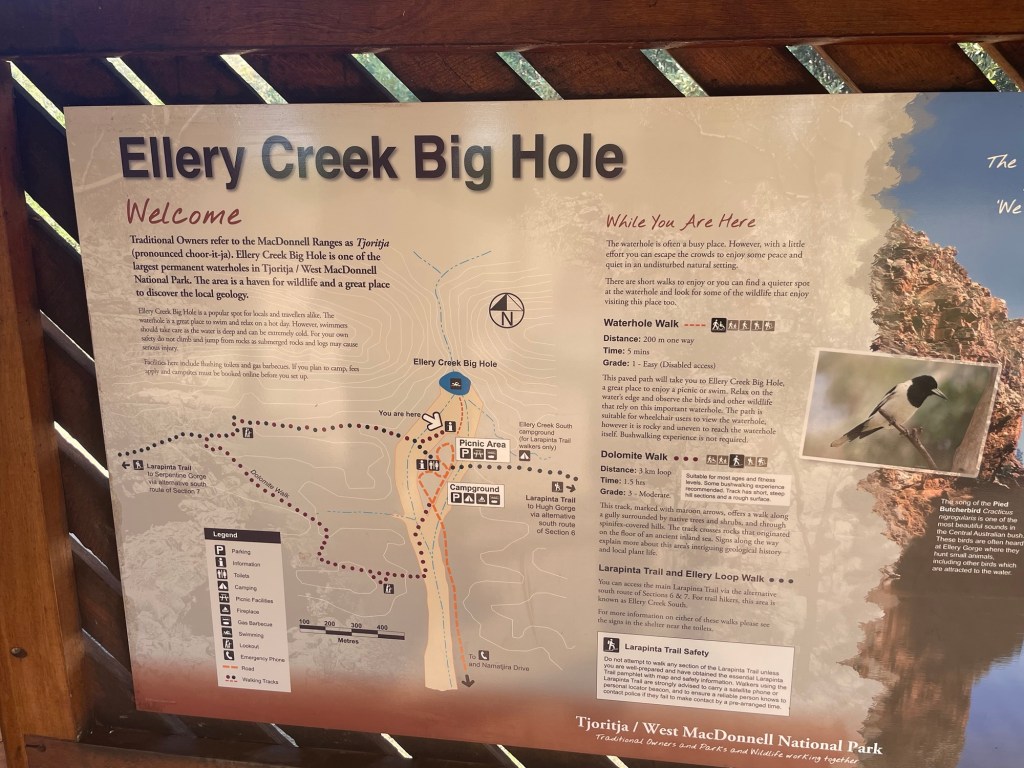
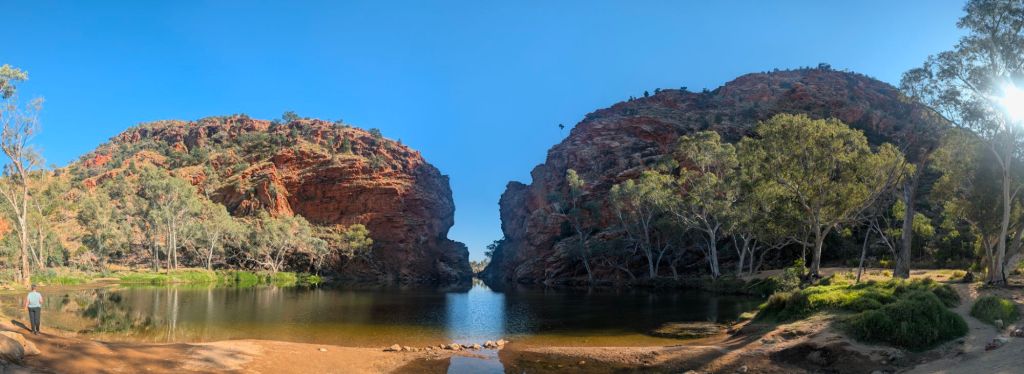
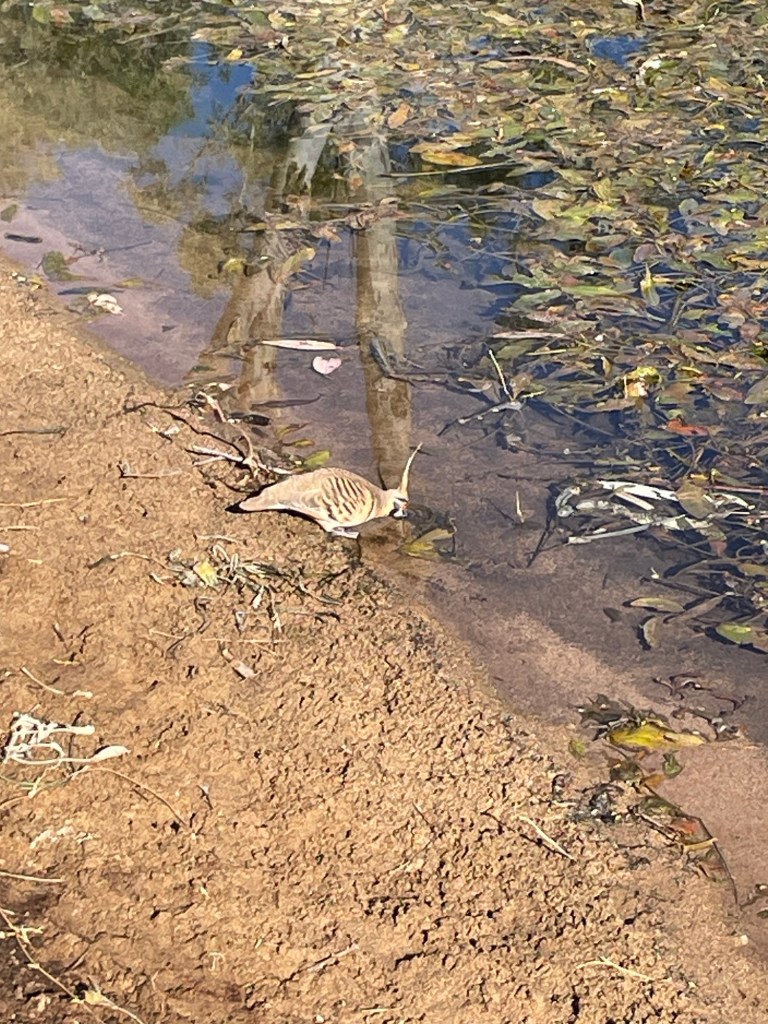
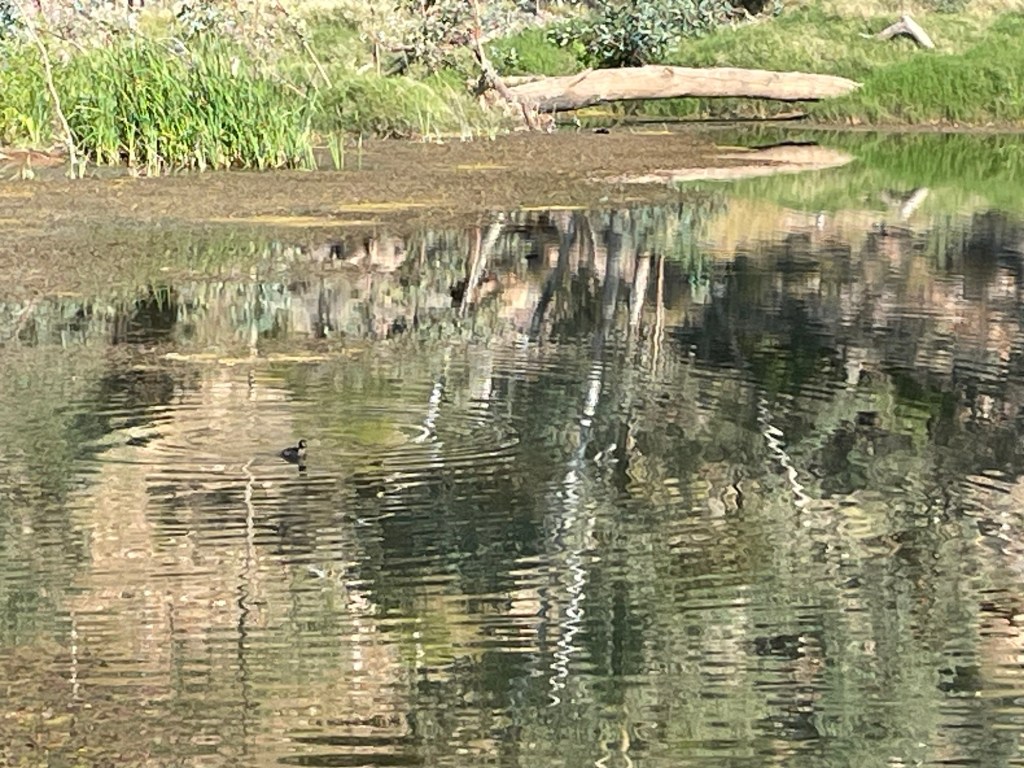
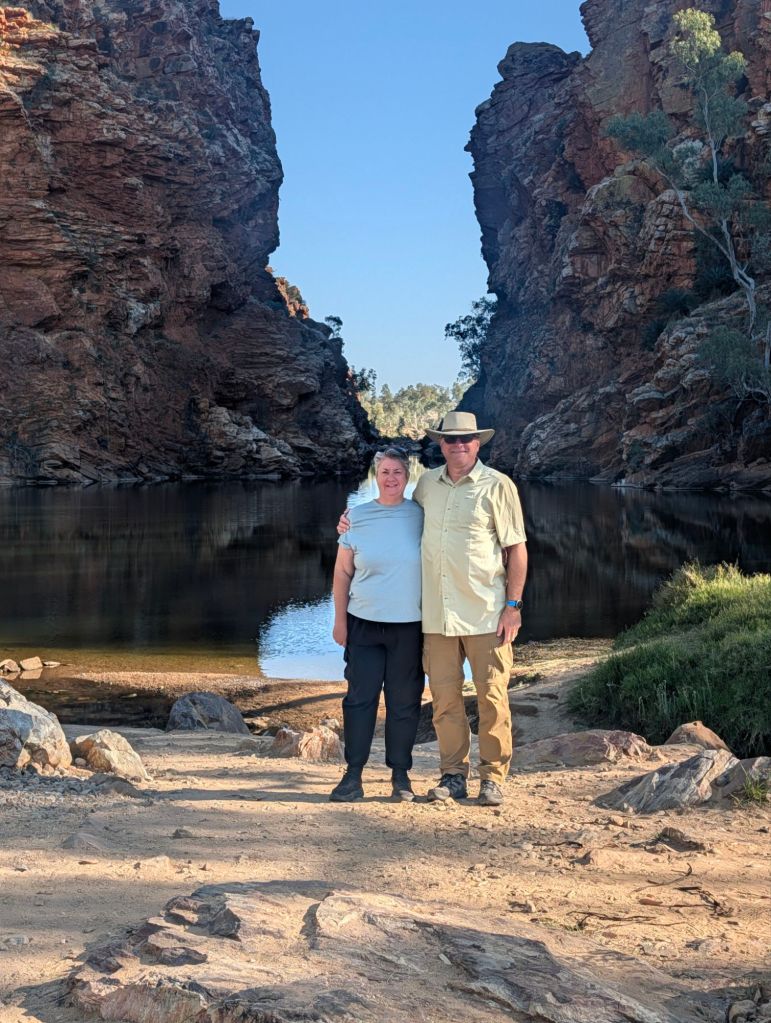
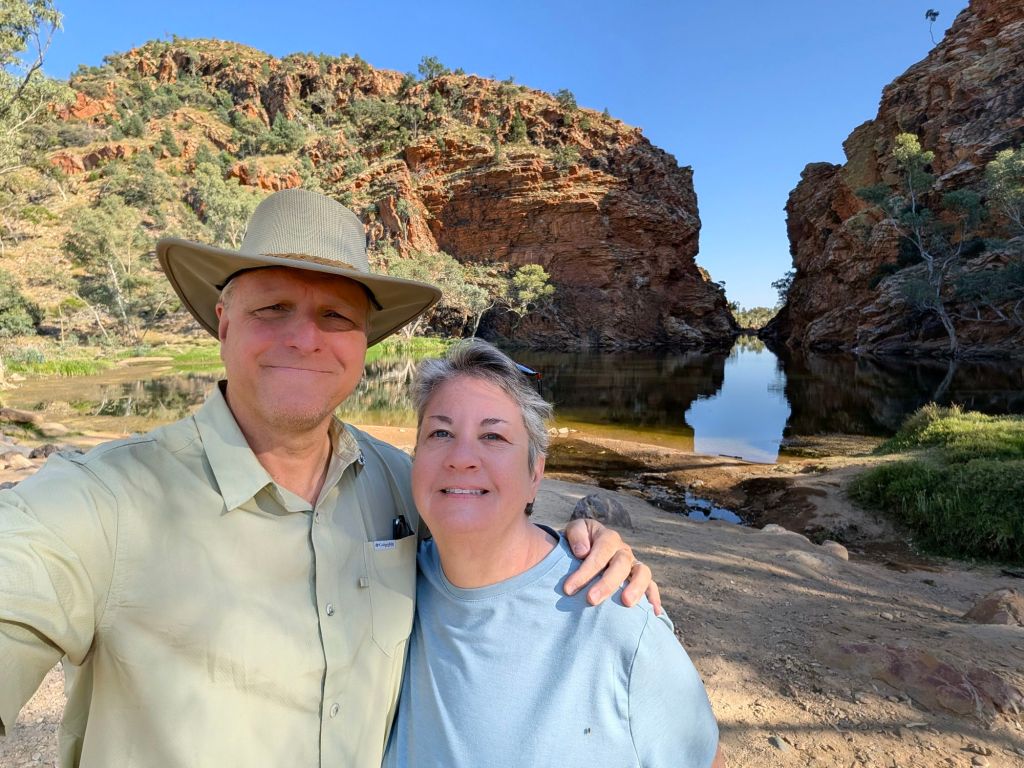
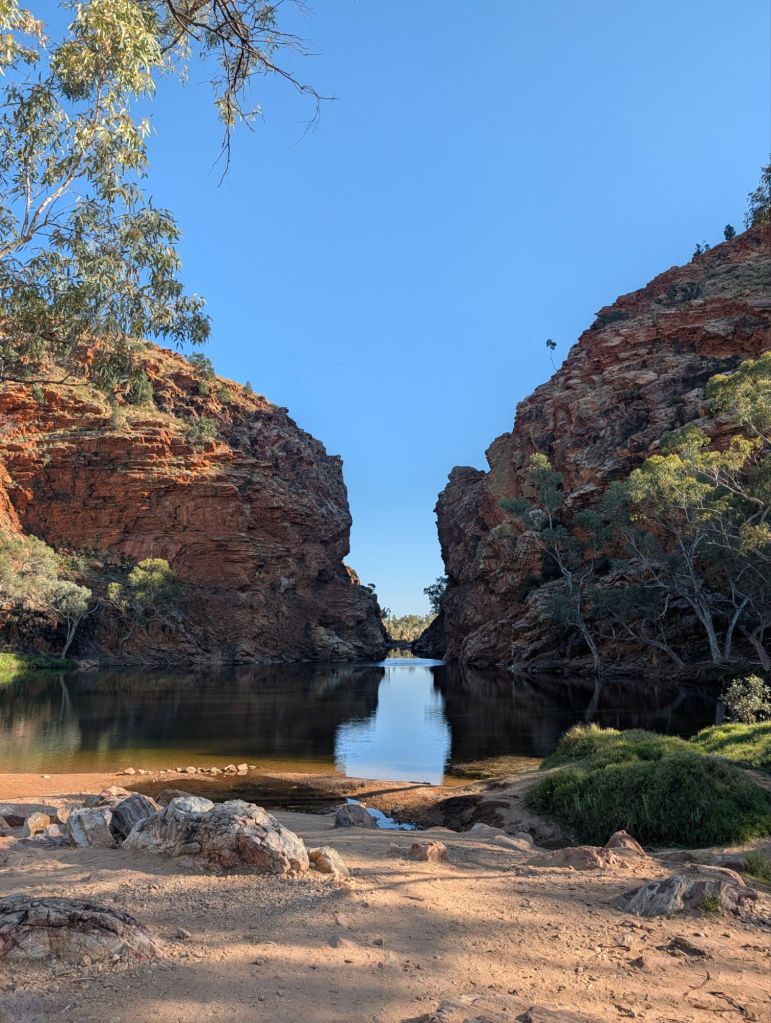
Just as we were leaving the Big Hole, a tour van full of noisy tourists arrived. Perfect timing!
Our plan had been to do another hike at Ellery Creek, the Dolomite Trail. We started it, but it was too wild for me–it was not a trail, really, so we punted. But while we were standing a few meters into the trail deciding whether to continue, an amazing thing happened. We saw our first wild kangaroo!
We were surprised by how fast it moved!!
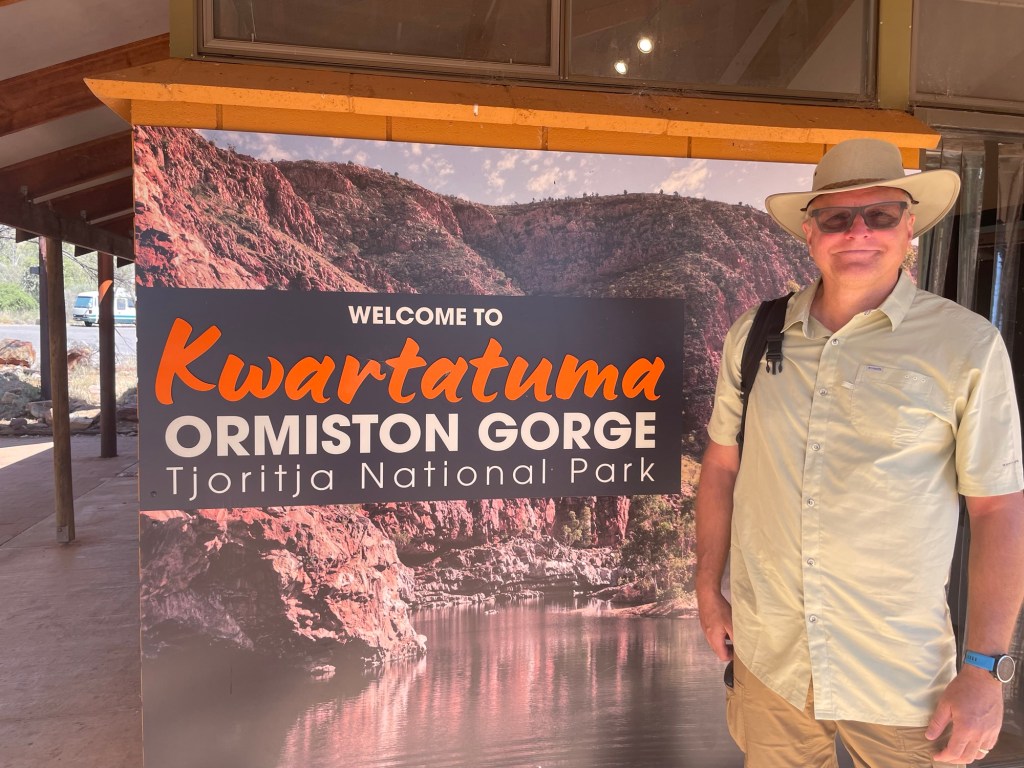
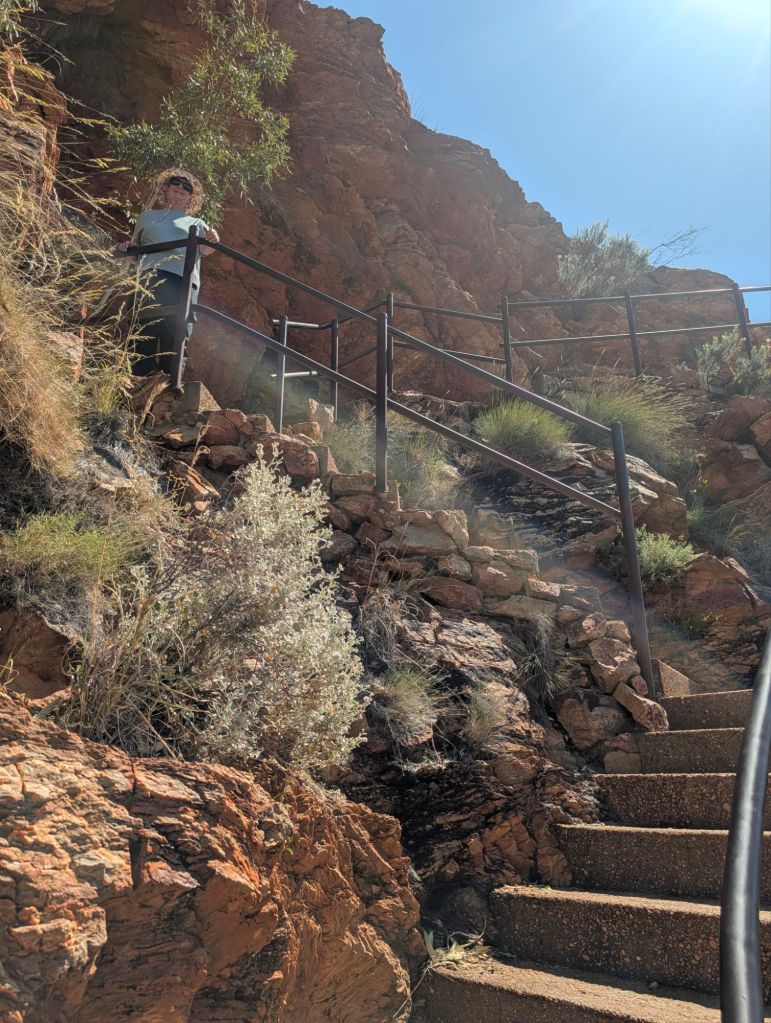
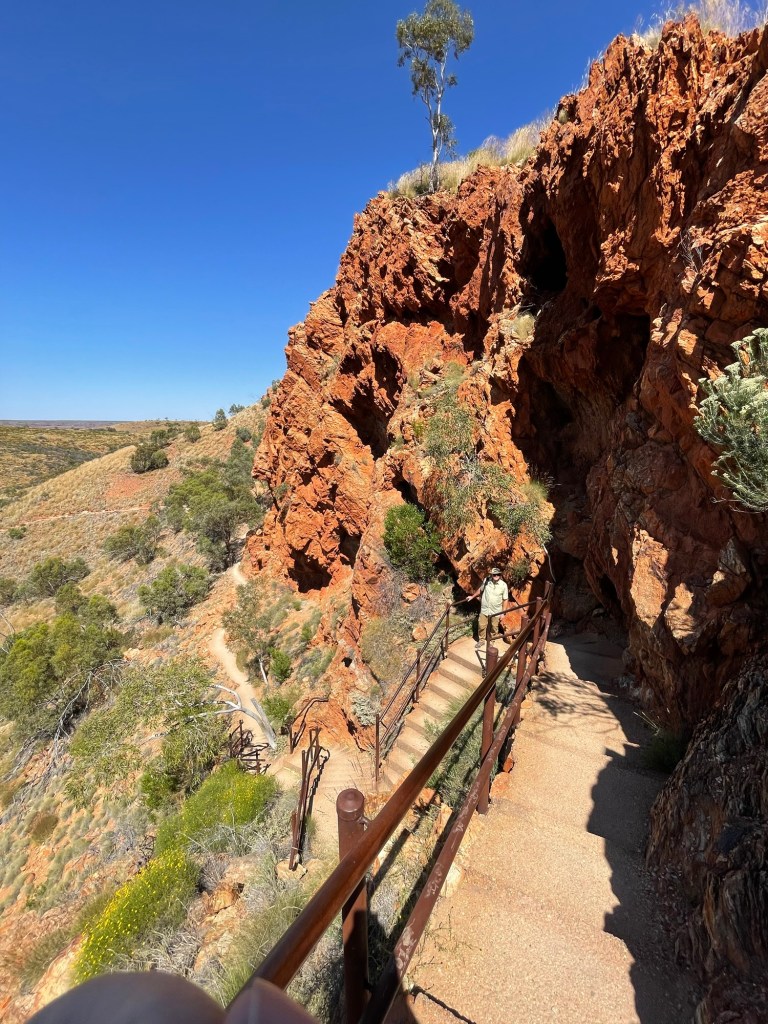
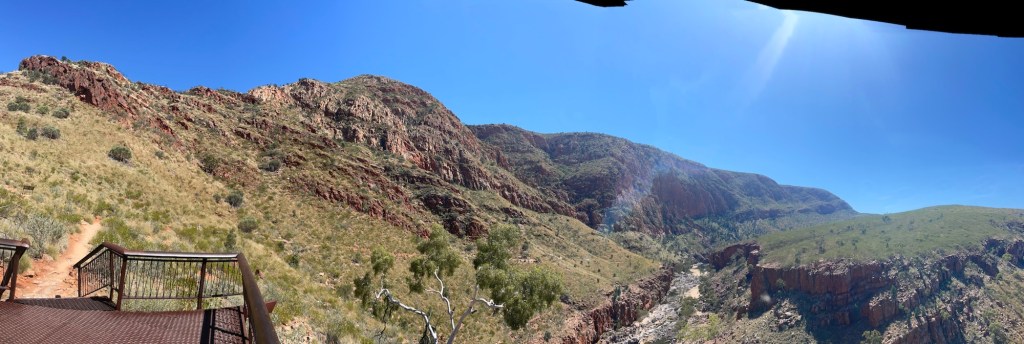
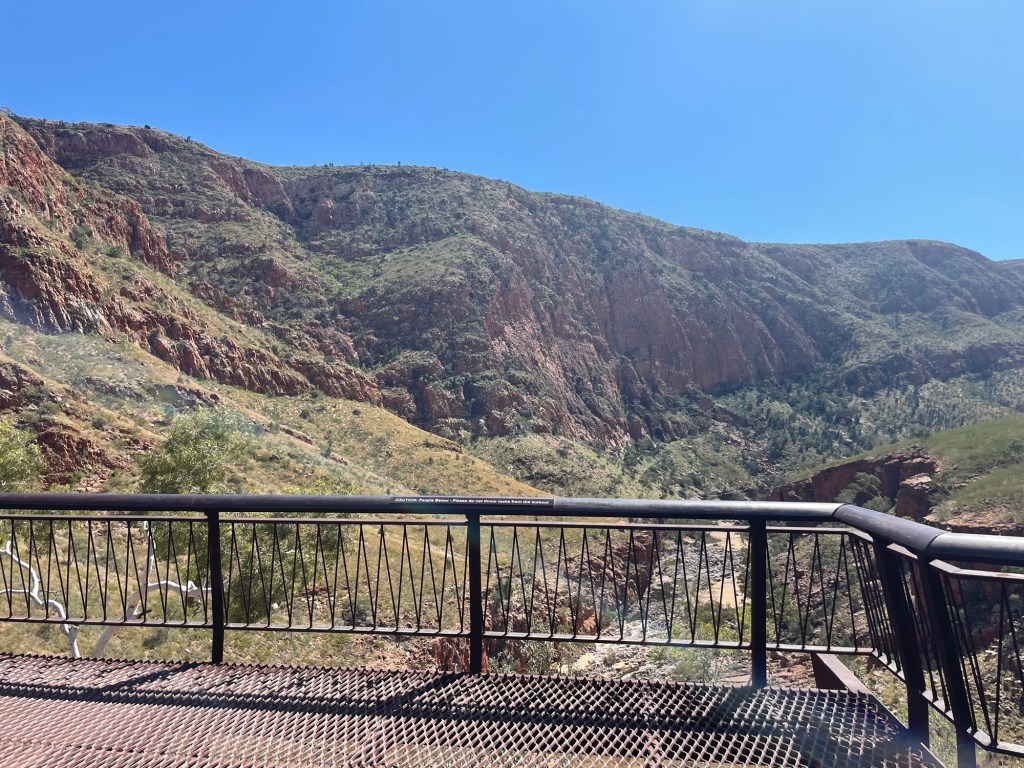
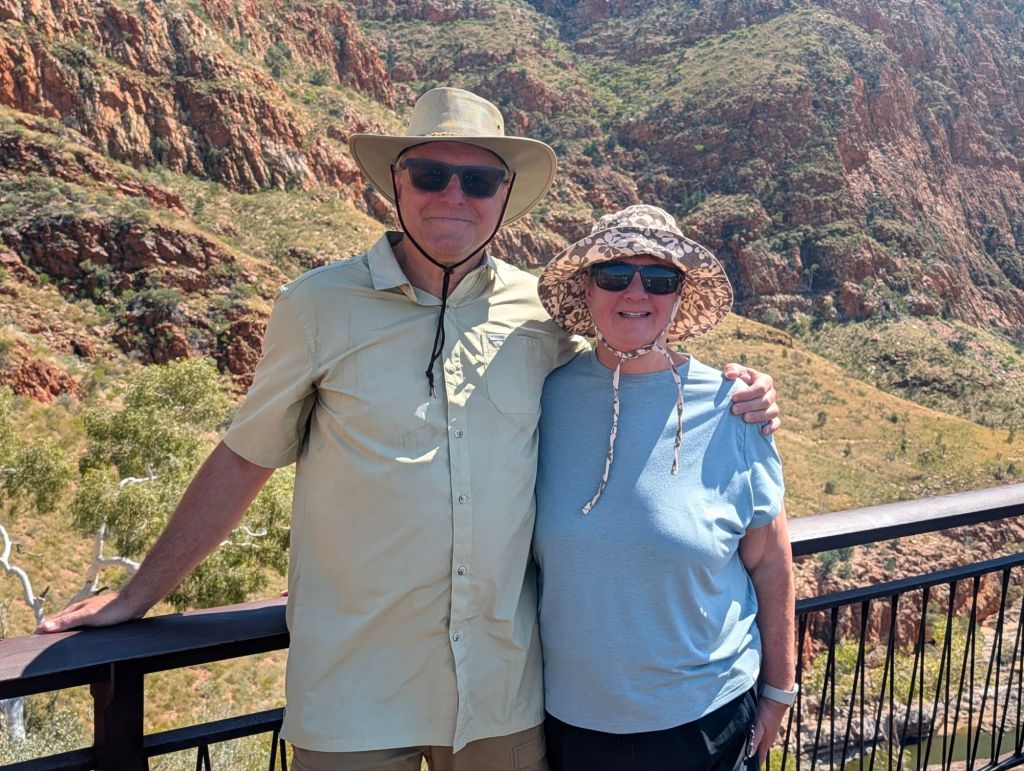
Our next stop was the Ormiston Gorge, also part of the national park. We walked up about 12 flights of stairs to a lookout, which was beautiful!
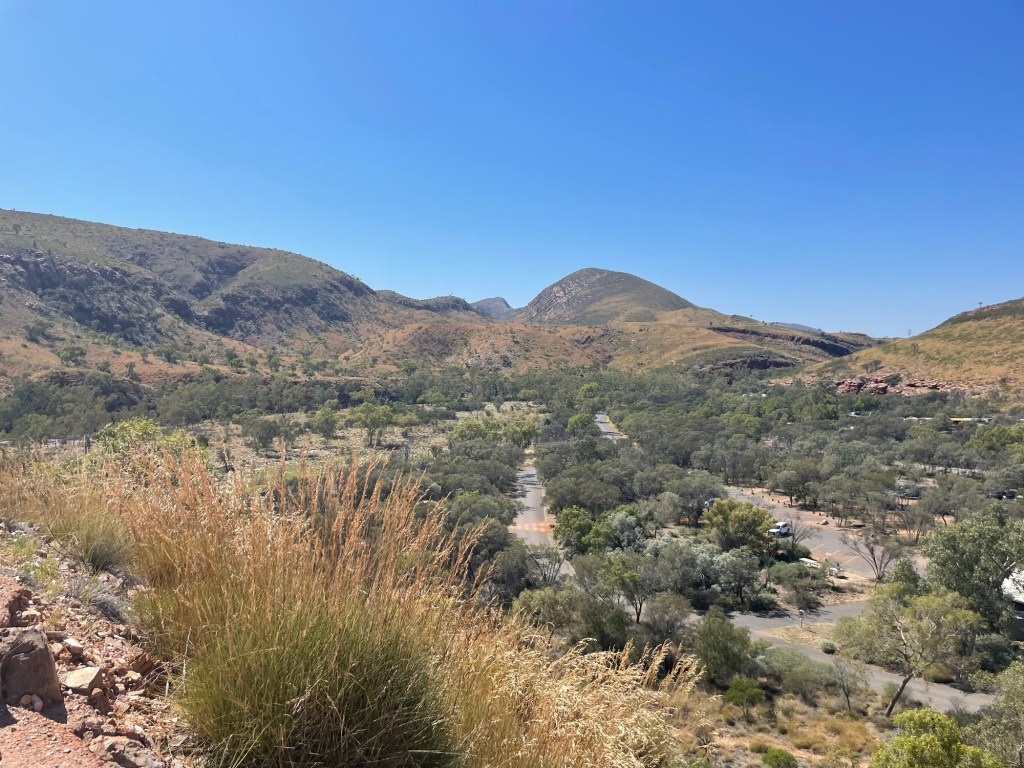
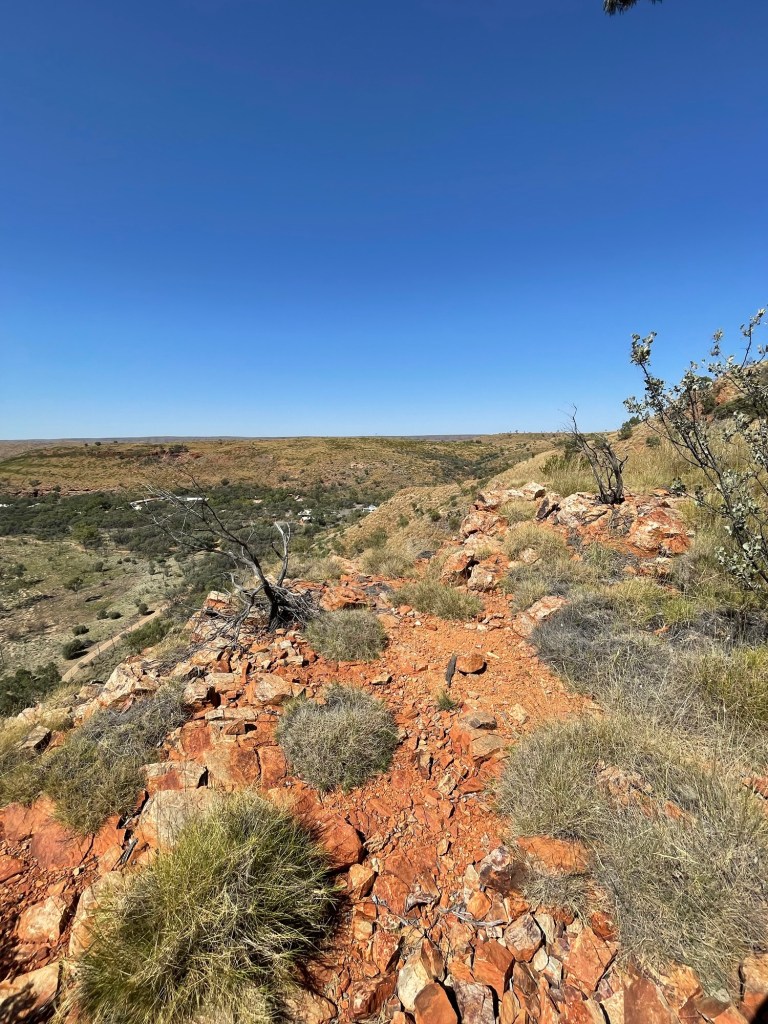
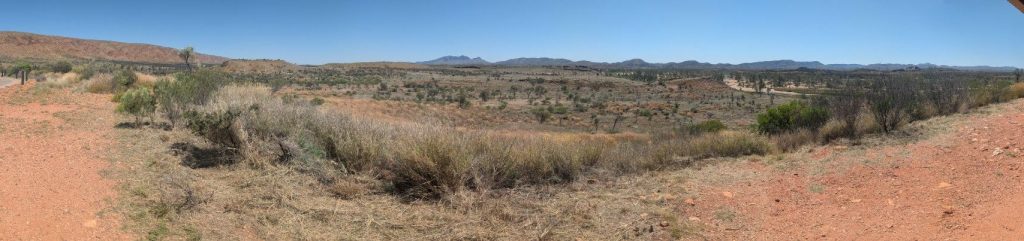
Next we stopped at the Mt. Sonders Lookout.
Our next stop, the Glen Helen Gorge, was disappointing. We walked about 20 minutes to what was supposed to be a pretty watering hole in a gorge, but was actually a pool of stagnant, smelly water. It is apparently the wrong time of year for Glen Helen. It is also possible that there is still a pretty watering hole there, but you can’t get to it from where we were. The path we were on was called the “alternate route” to the gorge; the non-alternate route appears to be closed, as is the lodge and the discovery center (centre) that is located there.
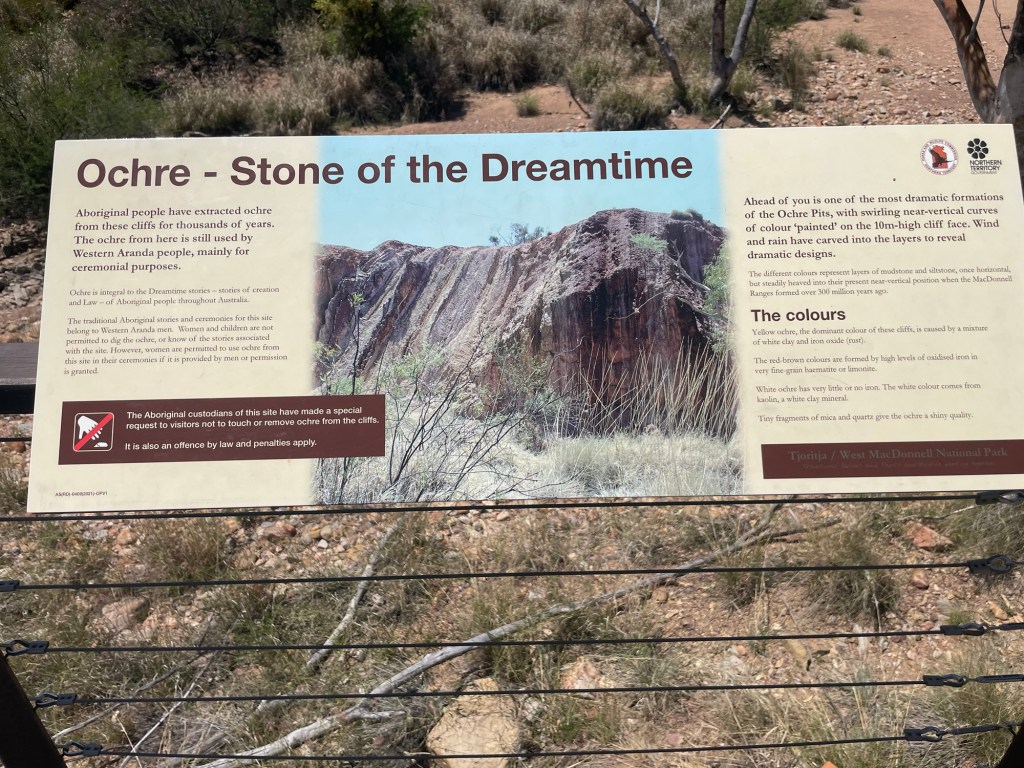
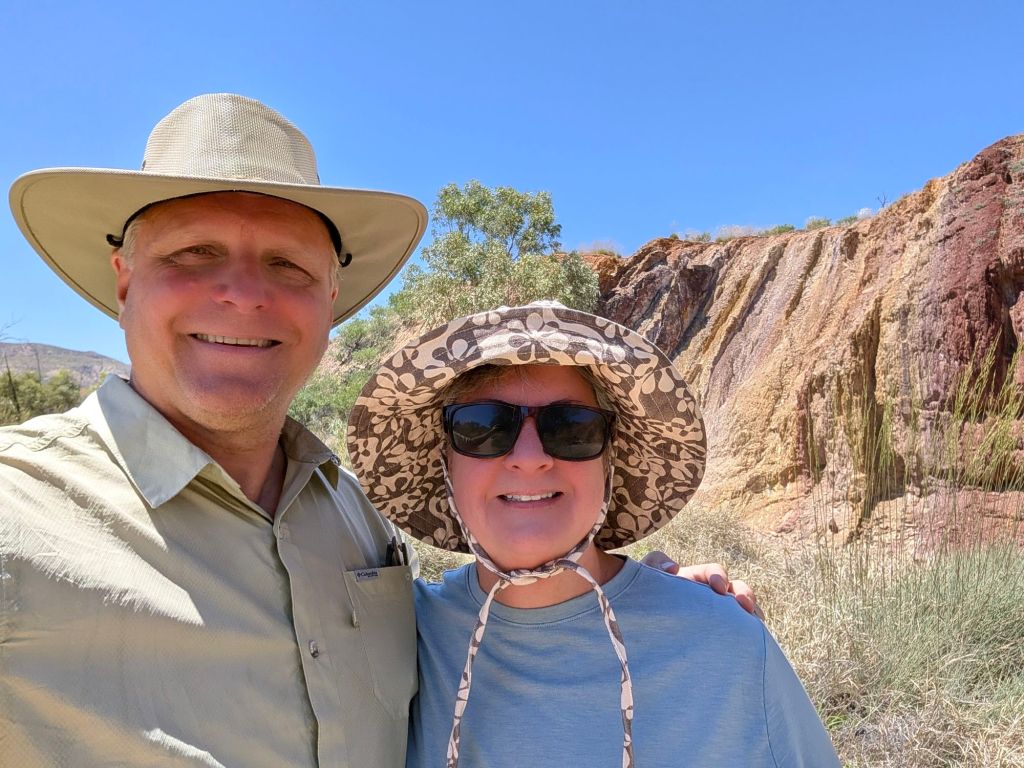
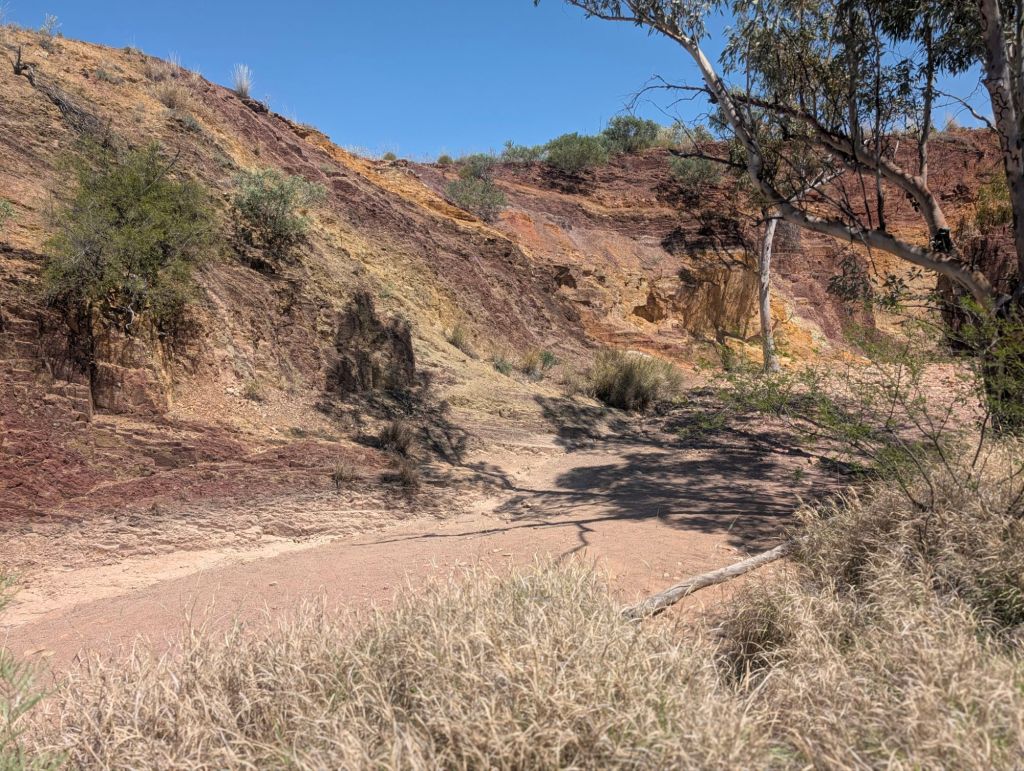
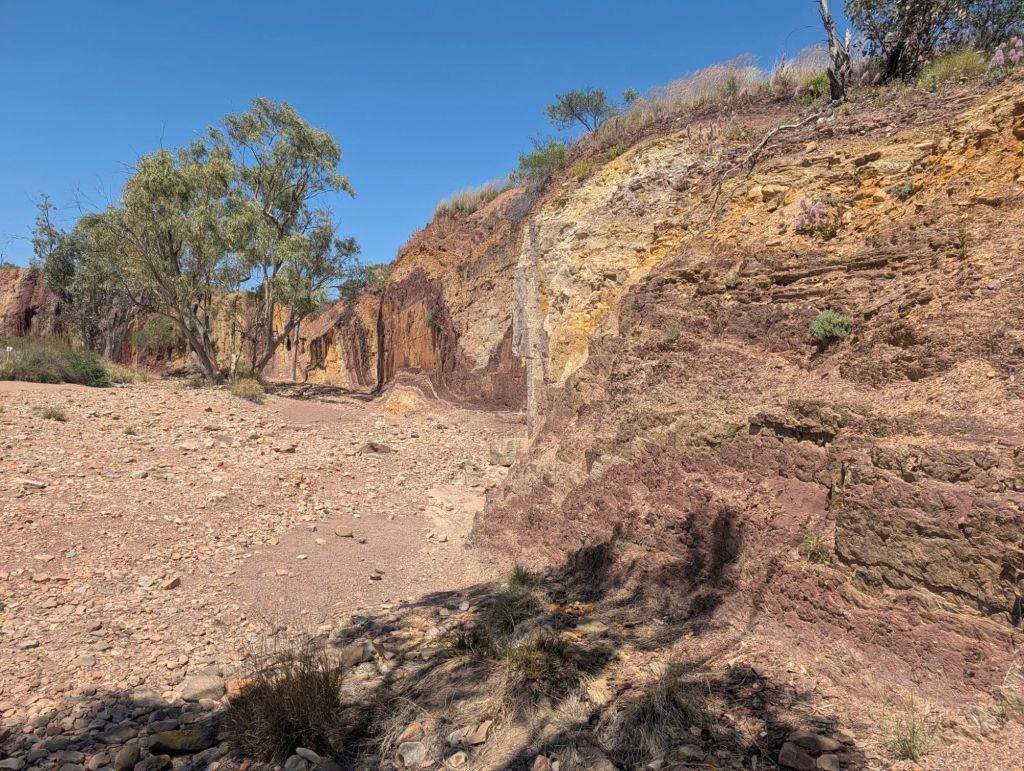
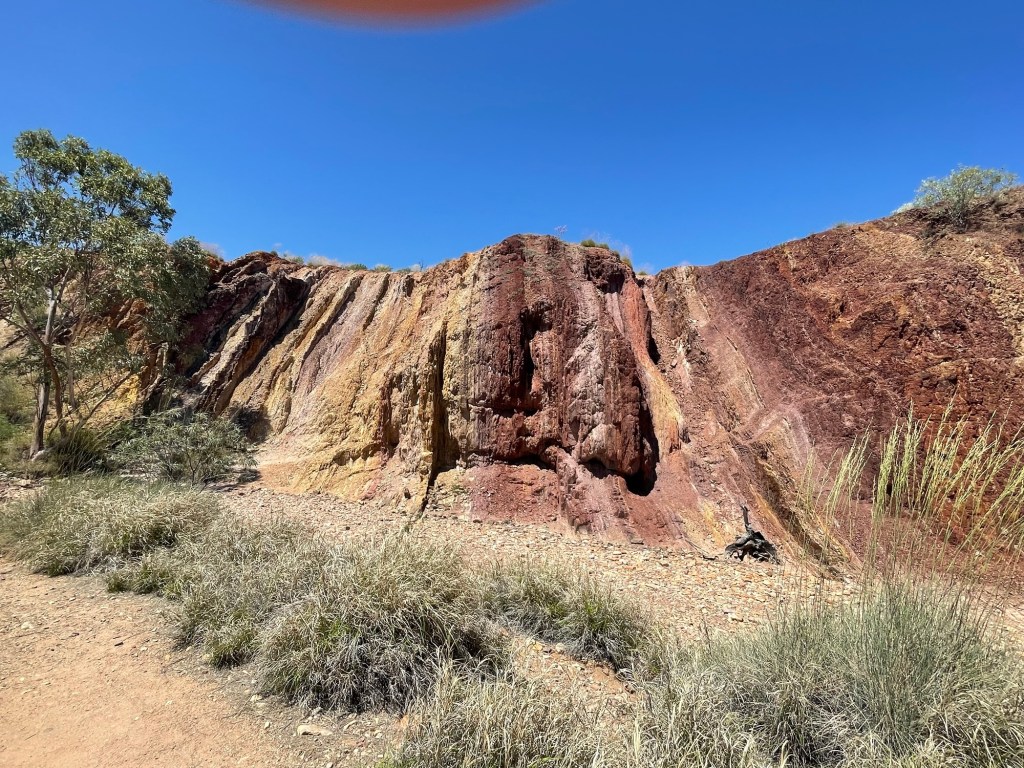
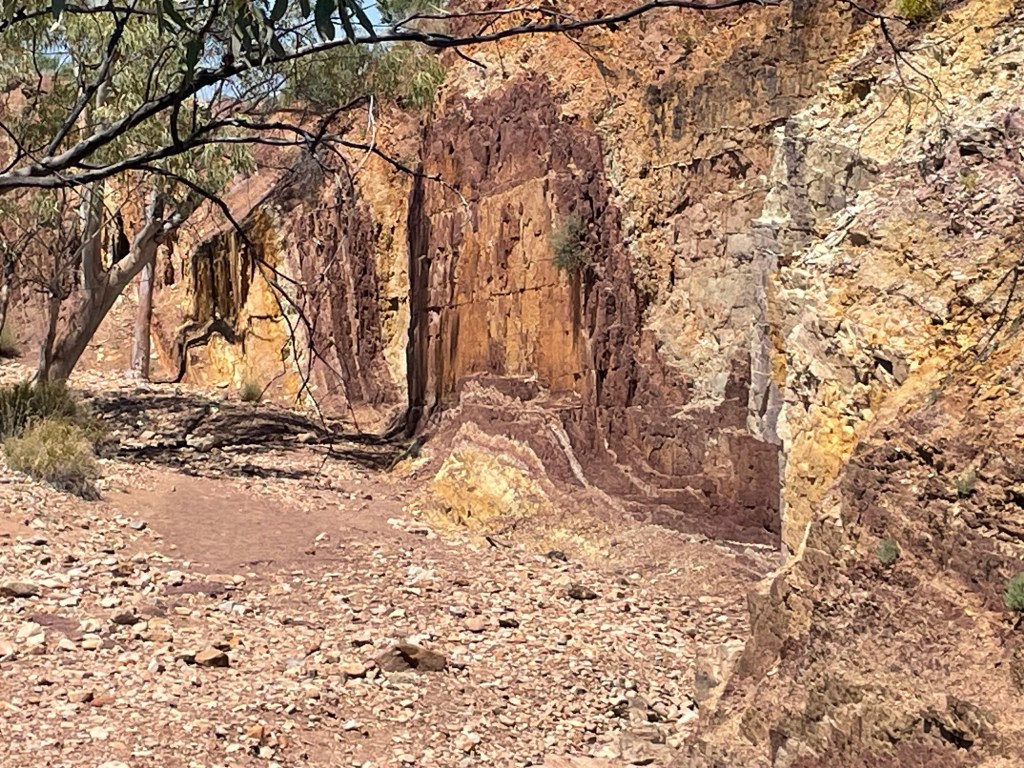
Our final stop was the Ochre Pits, which were very cool. Indigenous people traditionally have used them for their various colors–for body paint, artwork, and weapons. Red ochre was used for medicinal purposes as well.
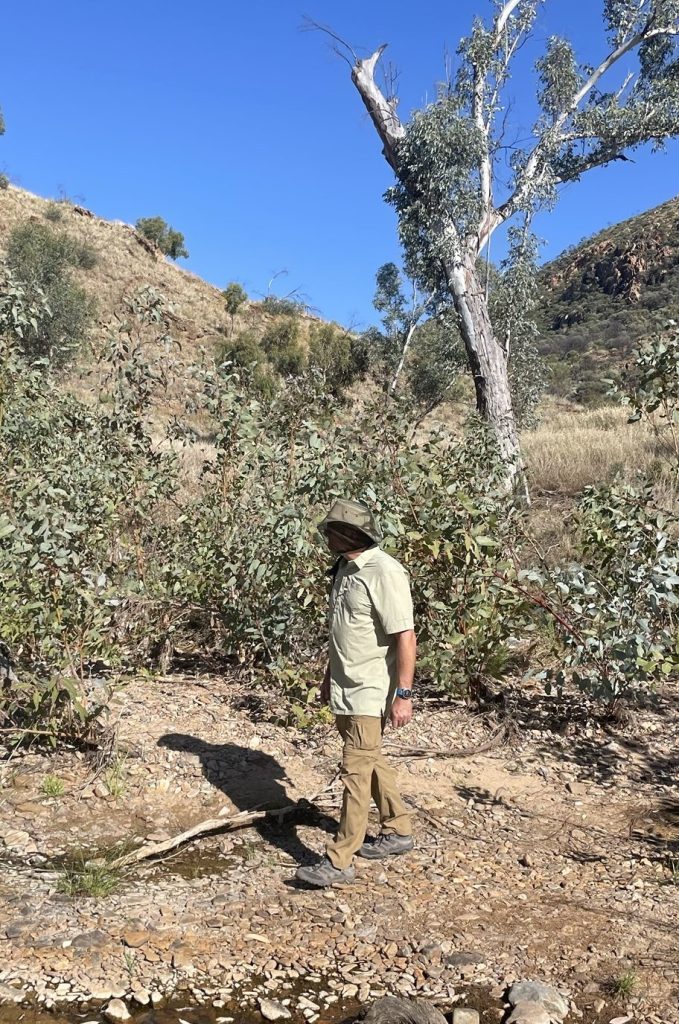
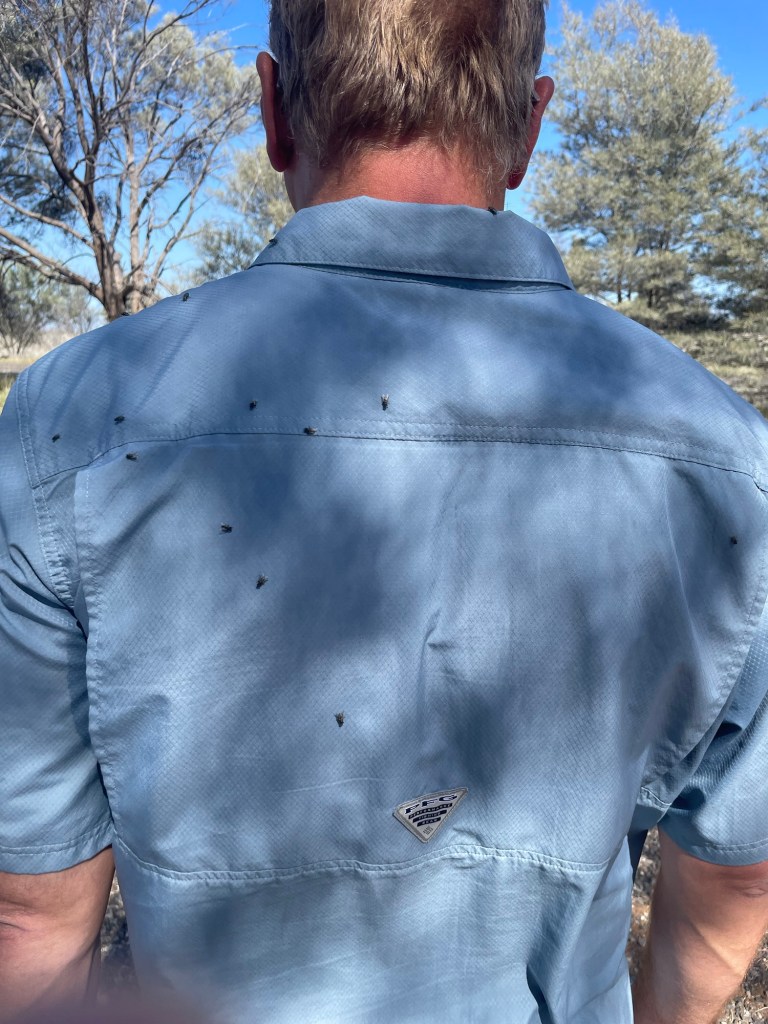
By that time it was afternoon, which means it was hot and the black flies were getting really annoying. They are attracted to your eyes and nose. Rich tried a fly net for awhile, but that gets awfully hot.
Luckily we had finished our hike list, so we headed back to the hotel to relax. On our way back we saw controlled burns being done. Australia has had some terrible wildfires (bush fires) in the last several summers, so hopefully these controlled burns will help prevent them this summer.
One more note before we leave the Outback and head to Adelaide. Flooding roads appears to be a huge problem in the area we drove through today. Signs warning of flooding appear at every single dip in the road; at one point we could see seven of them up ahead at one time. Right now everything is completely dry, but rainy season is coming up!
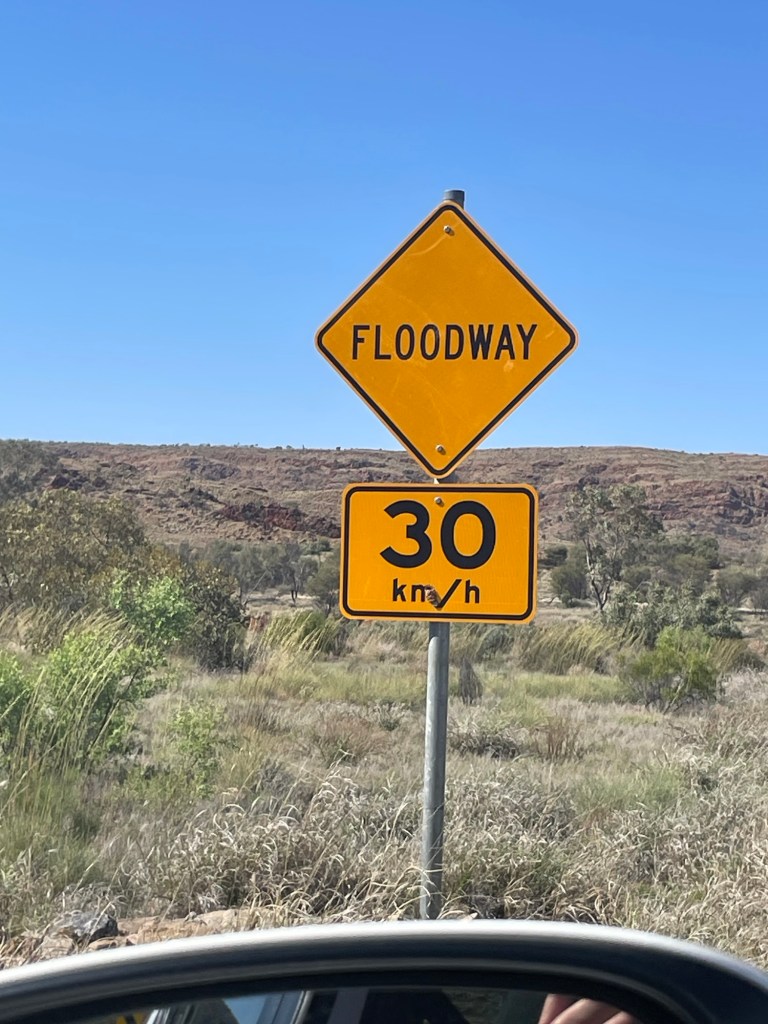
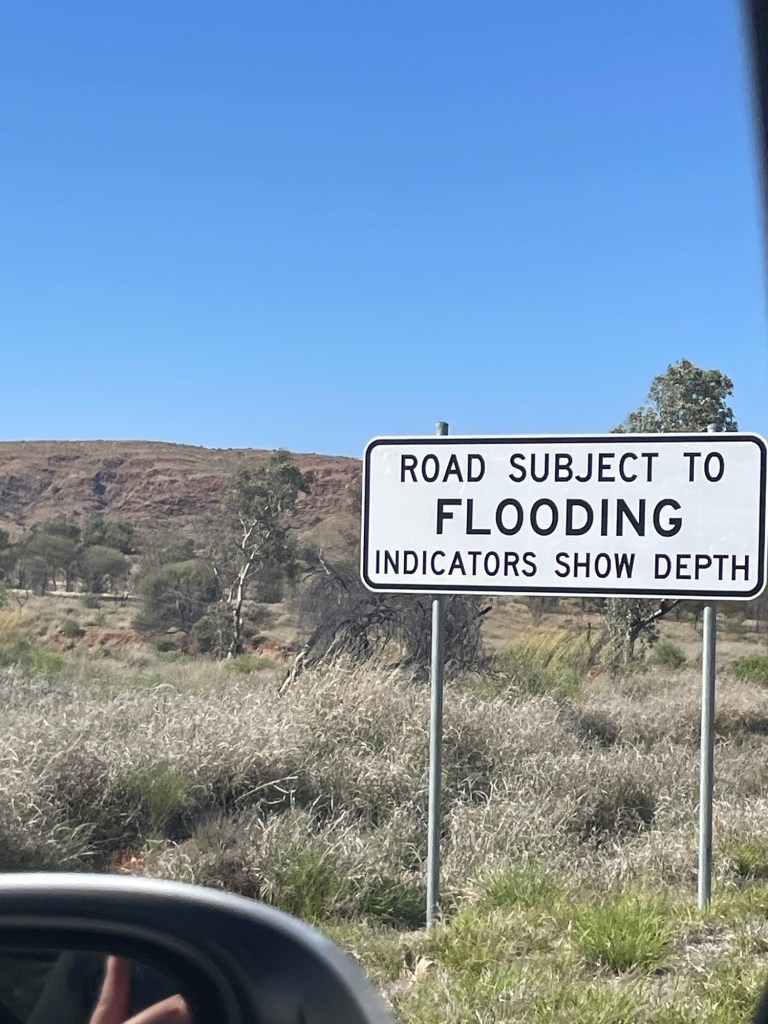
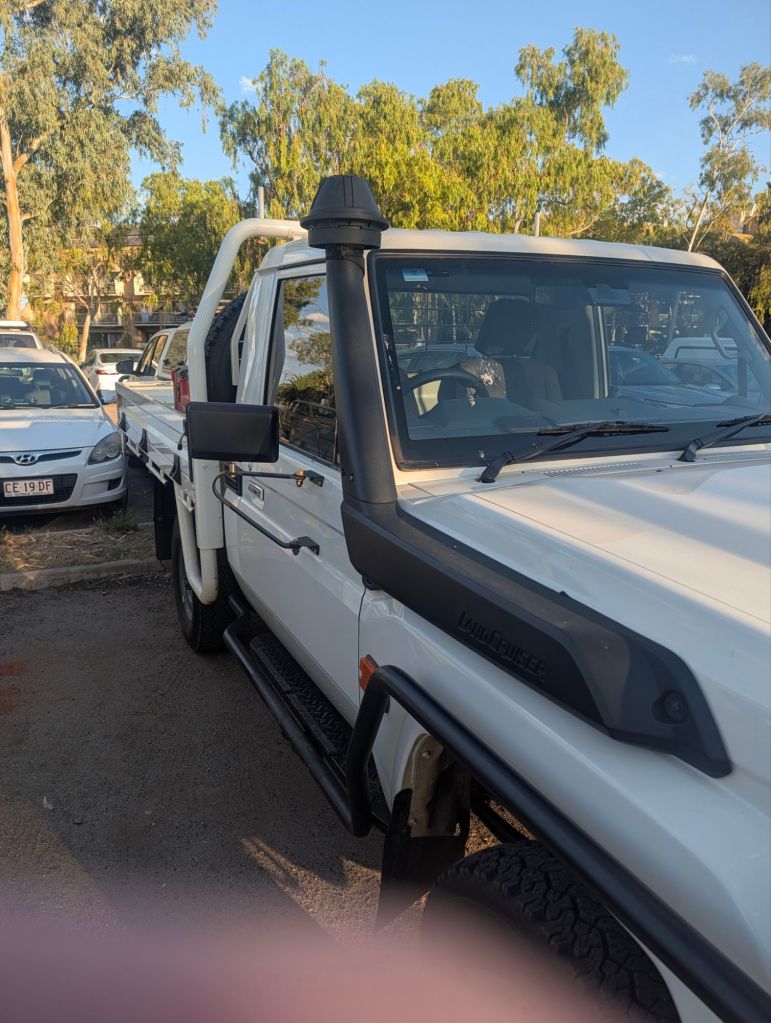
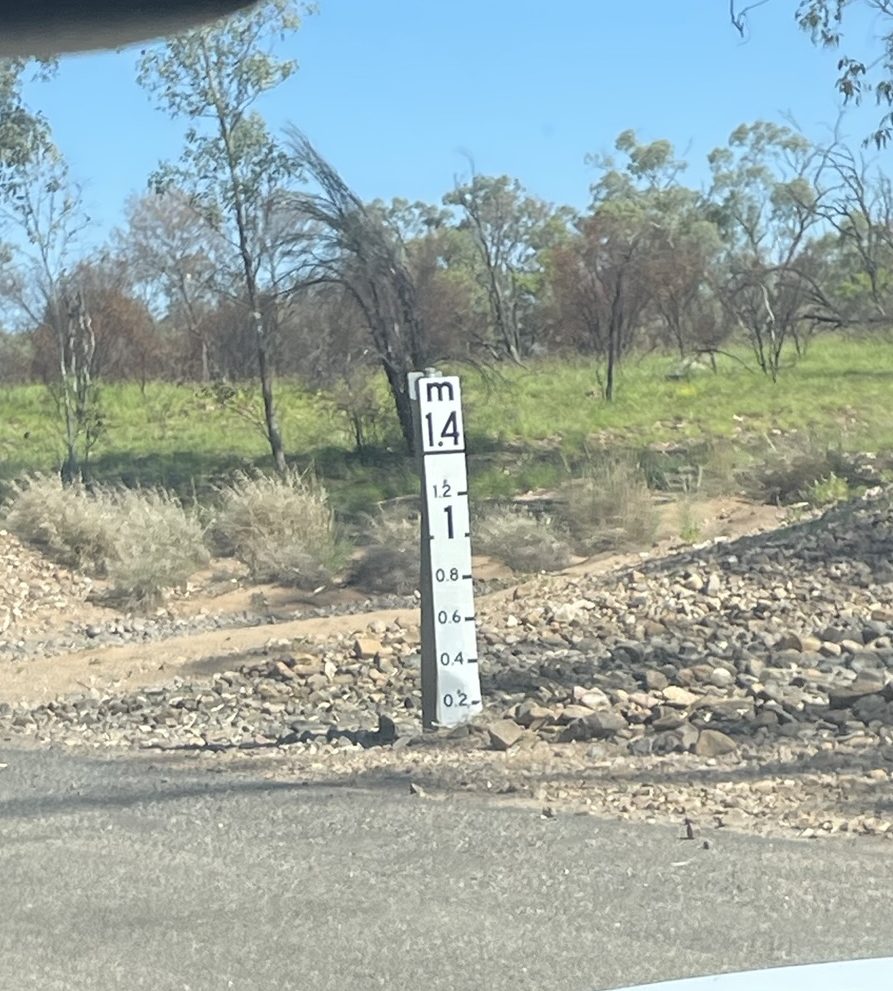
Many vehicles here have snorkels on them to help them get through higher water, and there are signposts (see below) to show how deep the water is.
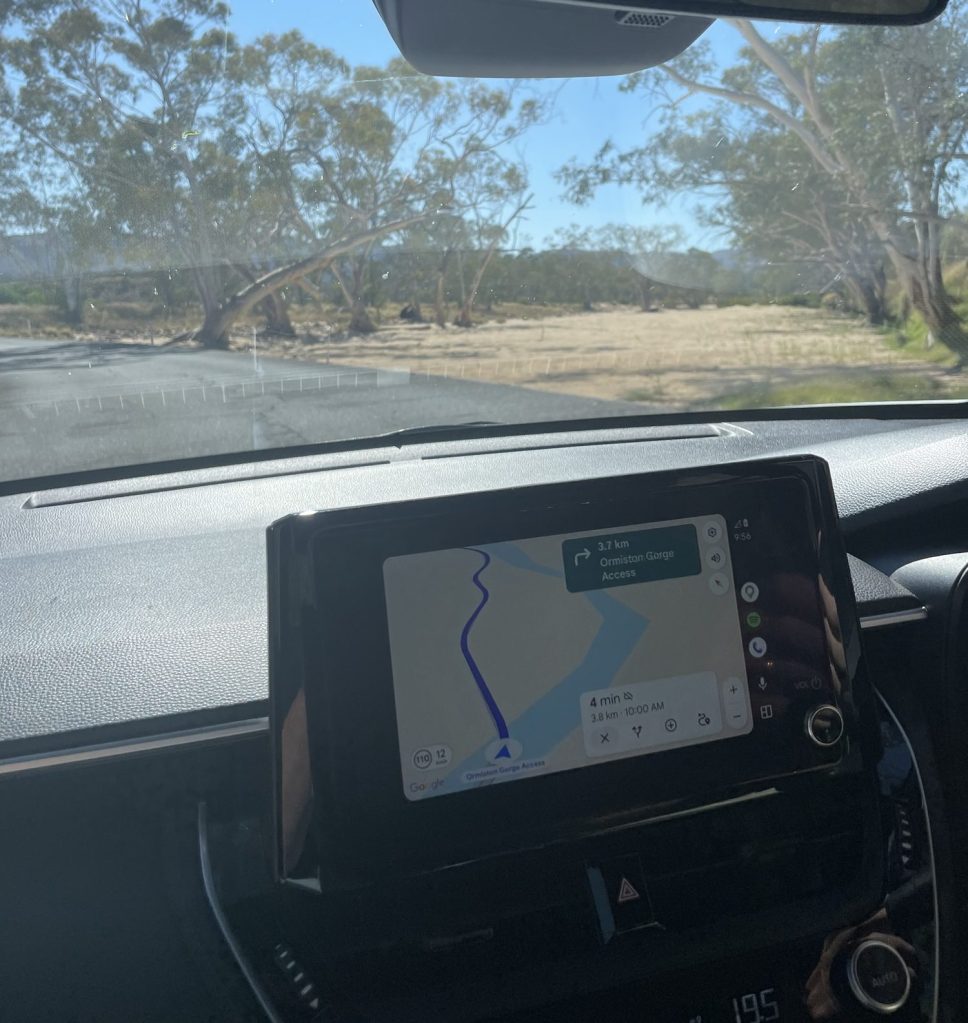
Rich also gets a kick out of the fact that google maps shows creeks, and even rivers, as blue, while in reality (right now) they are just sand.
We’ve really enjoyed our time in the Red Center–it is really beautiful and we’ve learned a lot about the indigenous cultures and the history here. Our next stop will be Adelaide, which is in the state of Southern Australia and on the coast. We are looking forward to seeing what it has to offer!


Leave a comment