
Monday morning we got up very early for a sunrise excursion to Kata Tjuta, which means “many heads,” reflecting the fact that, unlike the monolithic Uluru, Kata Tjuta is made up of multiple rock formations. This is one of the many facts we learned from our tour guide/van driver, Michael. Michael also told us about the animals that have been introduced into the area over the years, usually with terrible results. A man in the 1920s brought 24 rabbits into the area so he could hunt them; they grew to millions and threatened native mammals by competing for food. Cats are not indigenous to Australia and have become a real problem for native birds and lizards.
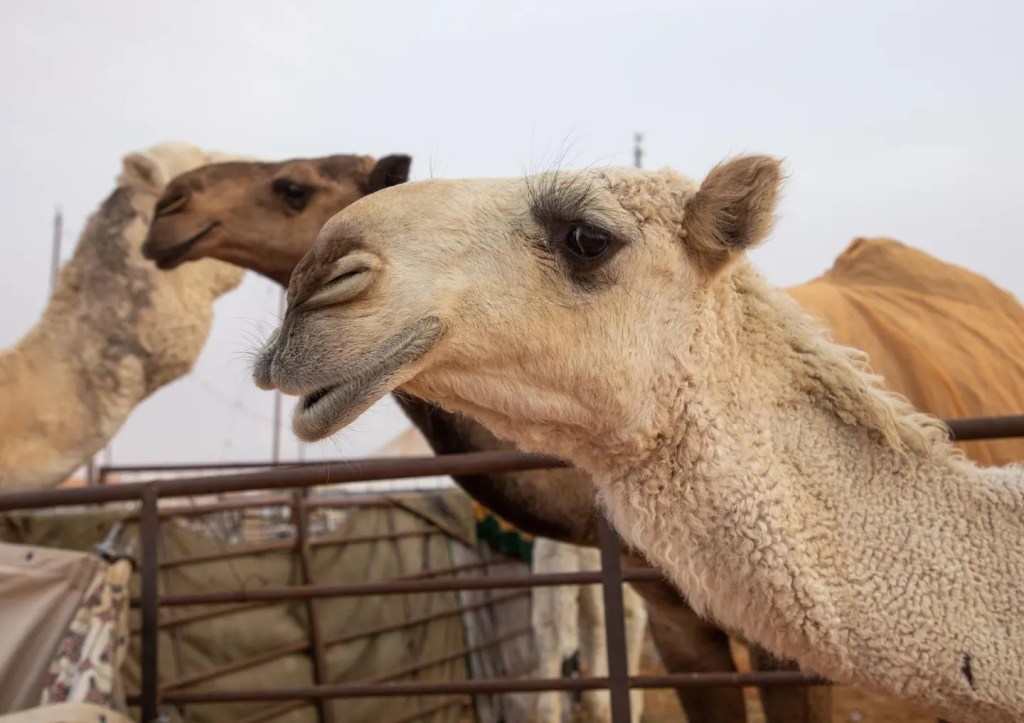
And then there are the camels. According to Michael, camels were brought in from Afghanistan to help with building roads, etc., in the Outback. When they were no longer needed, the government ordered them to be killed, but people liked them and released them into the wild instead. Now there are over 1.5 million wild camels here–the largest population in the world. Australia has become the largest exporter of camels in the world. Apparently they export a lot of them to Saudi Arabia, where they are used, among other things, for camel beauty pageants, complete with false eyelashes and botoxed lips. This is really true; here’s an article about it and a photo from that article: https://www.forbes.com/sites/tanyaakim/2026/02/24/another-camel-beauty-contest-is-rocked-by-a-botox-cheating-scandal/
O.k., enough about camels . . . for now. (That, readers, is called foreshadowing!)
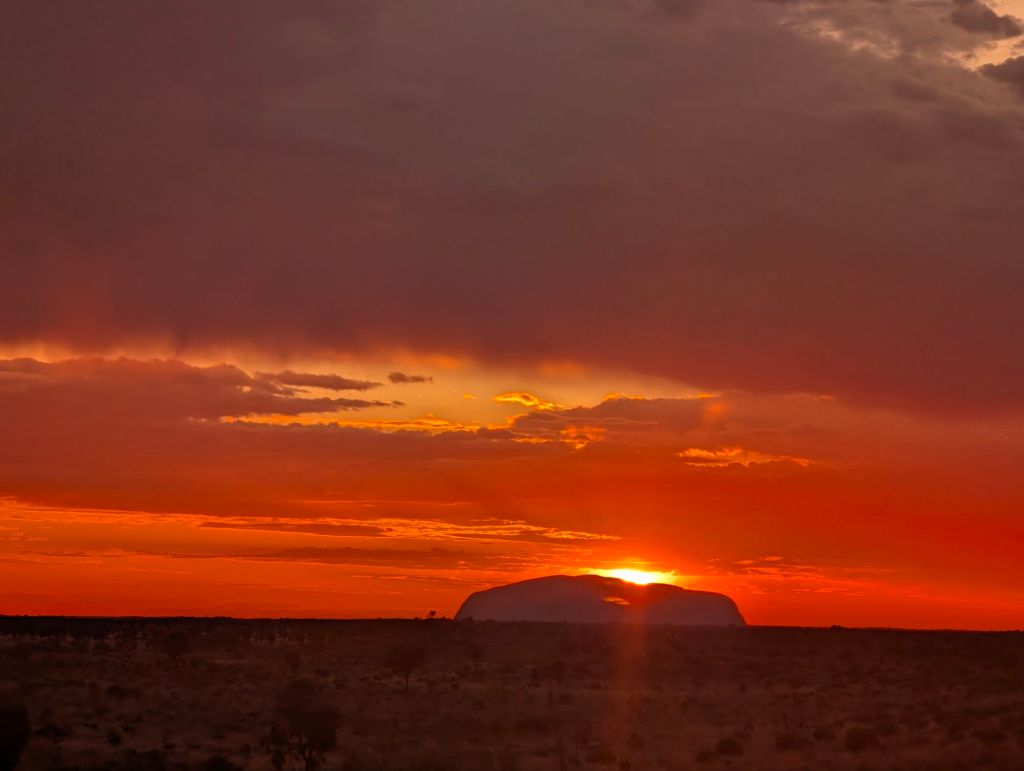
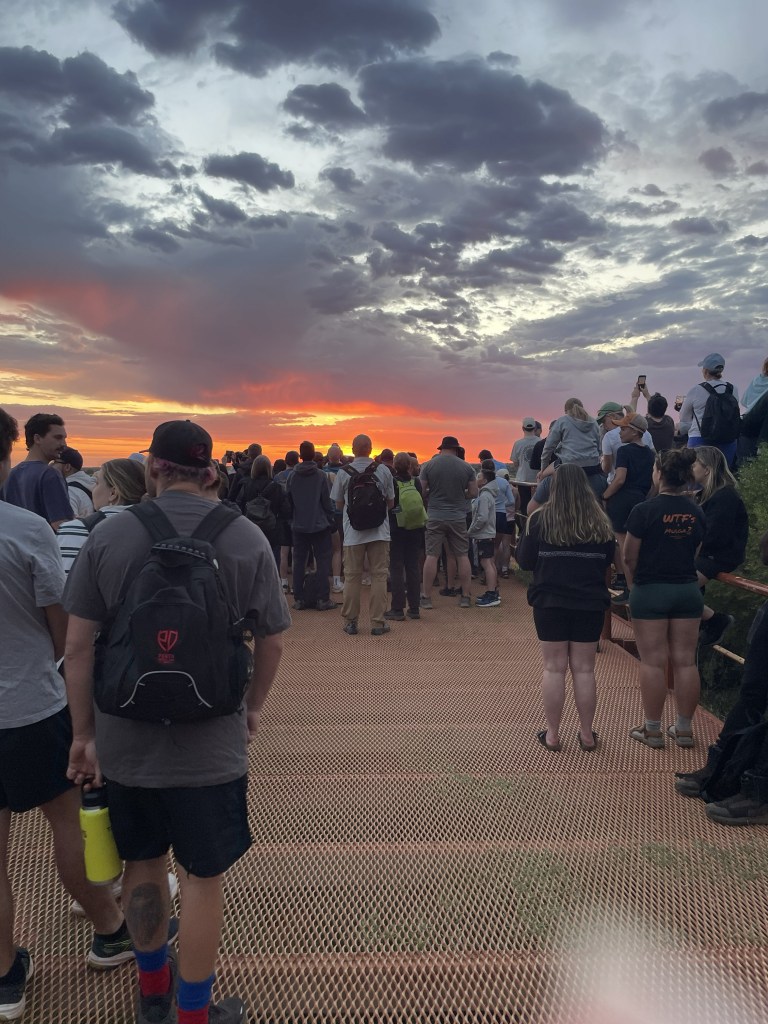
Our tour first stopped at a viewing platform to watch the sunrise, which would’ve been spectacular had there not been so many other people there. The platform allowed us to watch the sun come up from behind Uluru in the distance while also seeing how the colors of Kata Tjuta change with the rising sun.
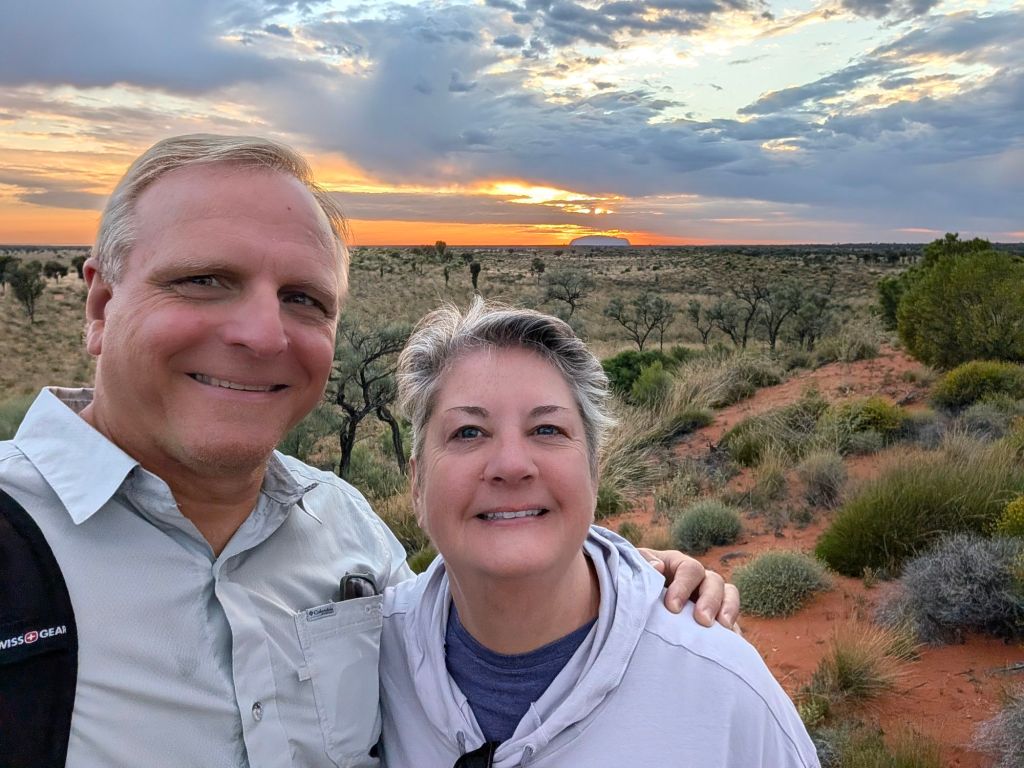
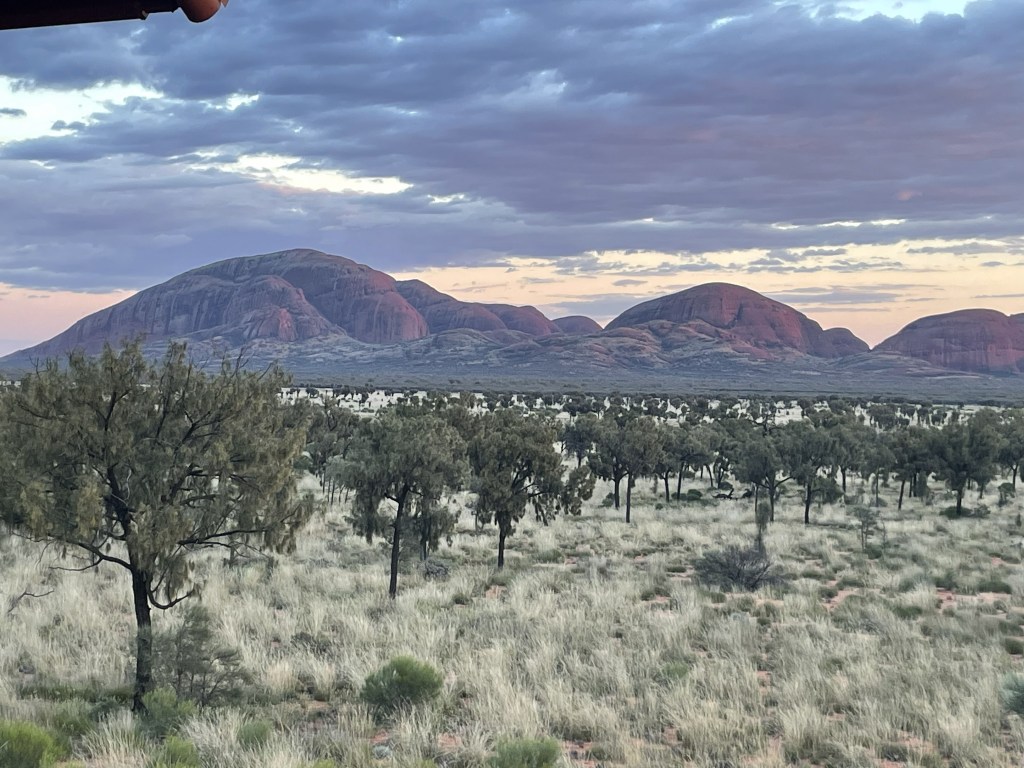
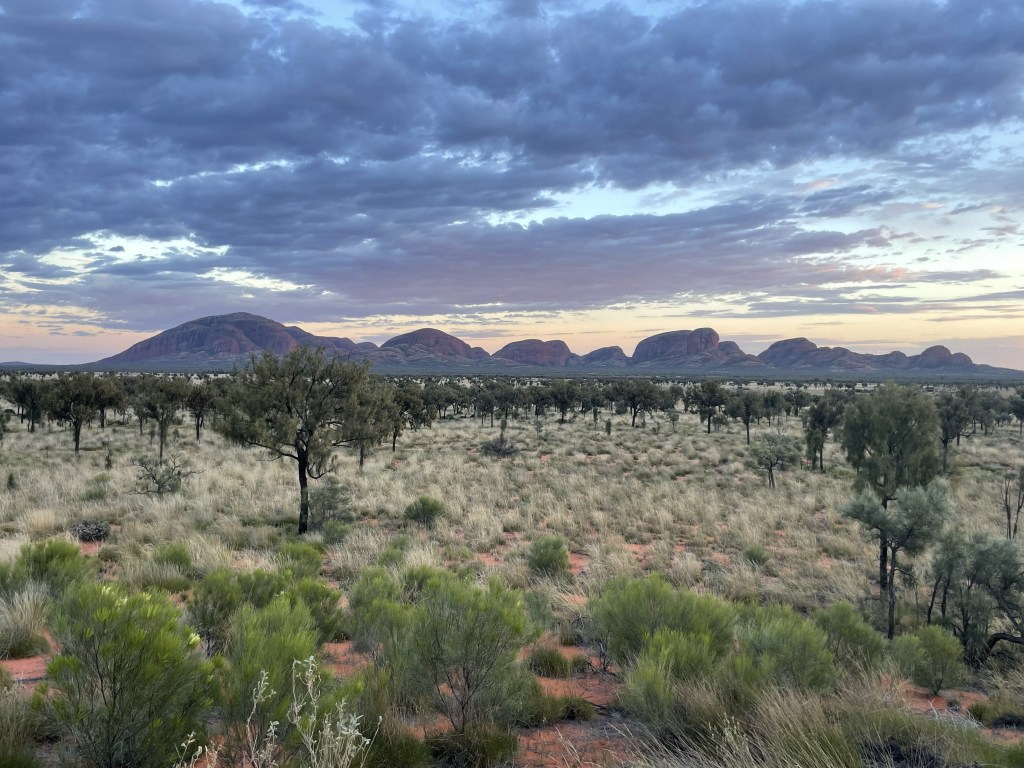
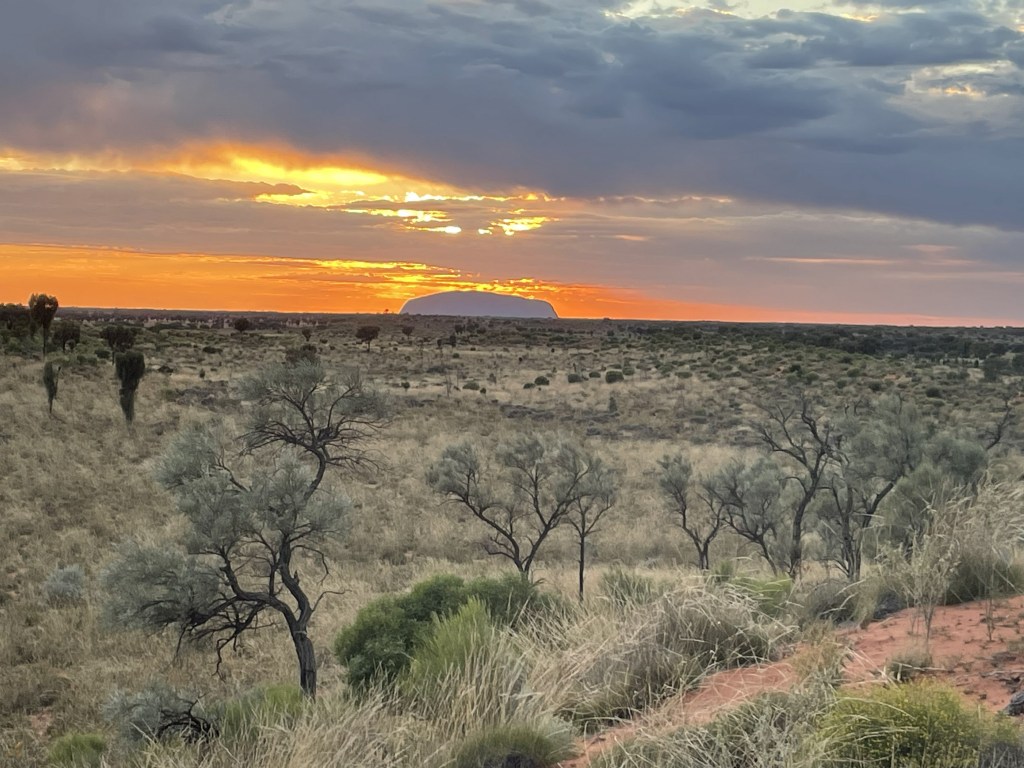
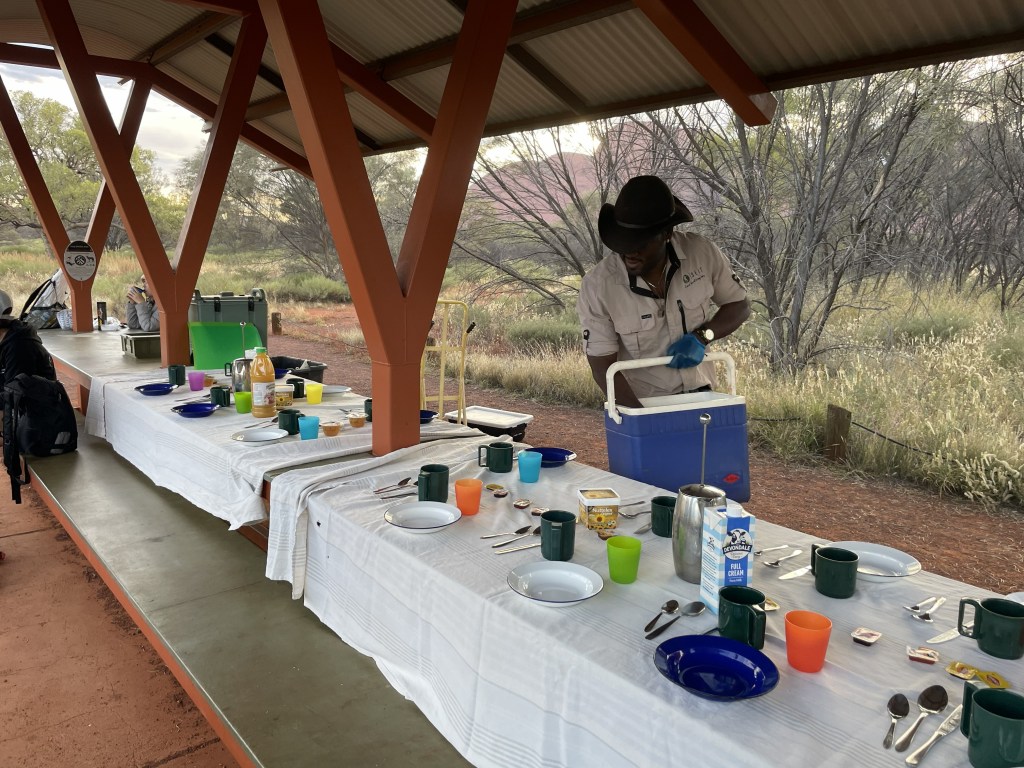
Next we drove to a picnic area and had a lovely picnic breakfast. This gave us the opportunity to chat with the others on our tour — two couples from Italy, a pair of friends from different parts of Australia on a girls’ weekend, and a woman from Malaysia. It was great to hear about their travels and get advice for the places we are heading to next.
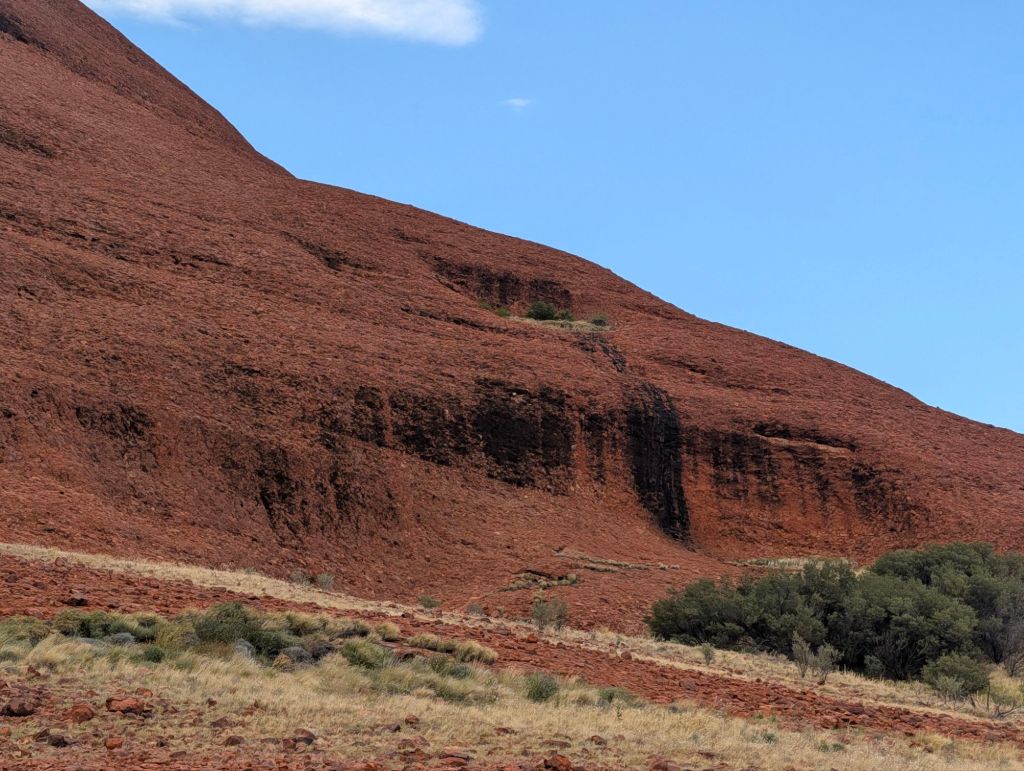
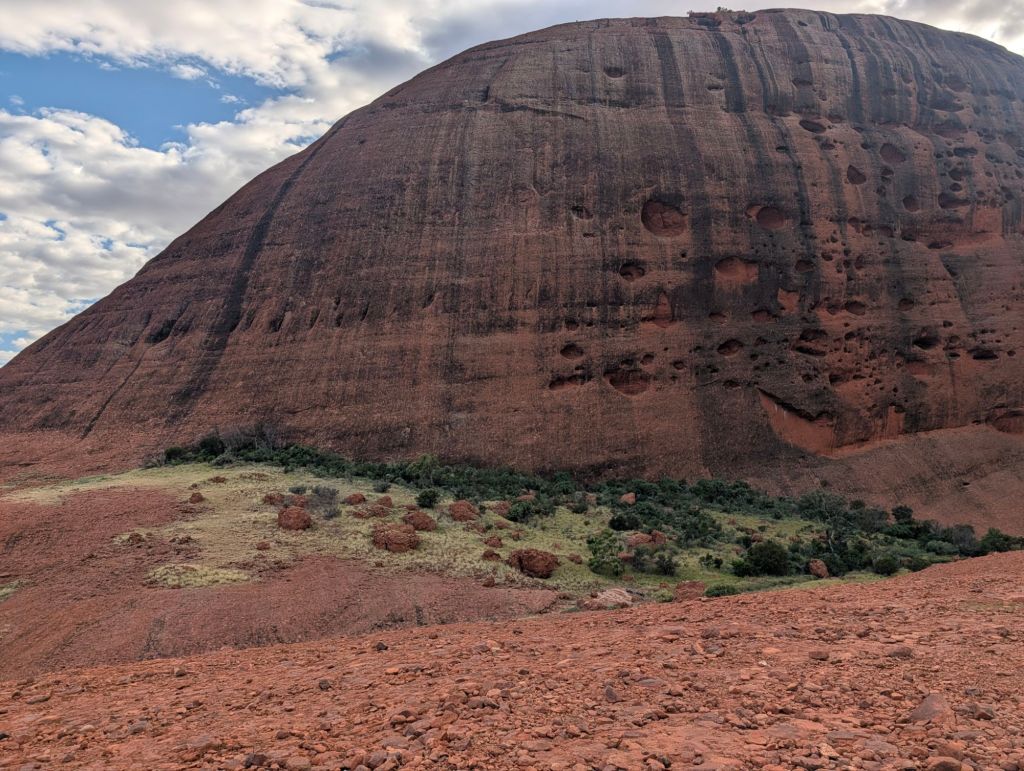
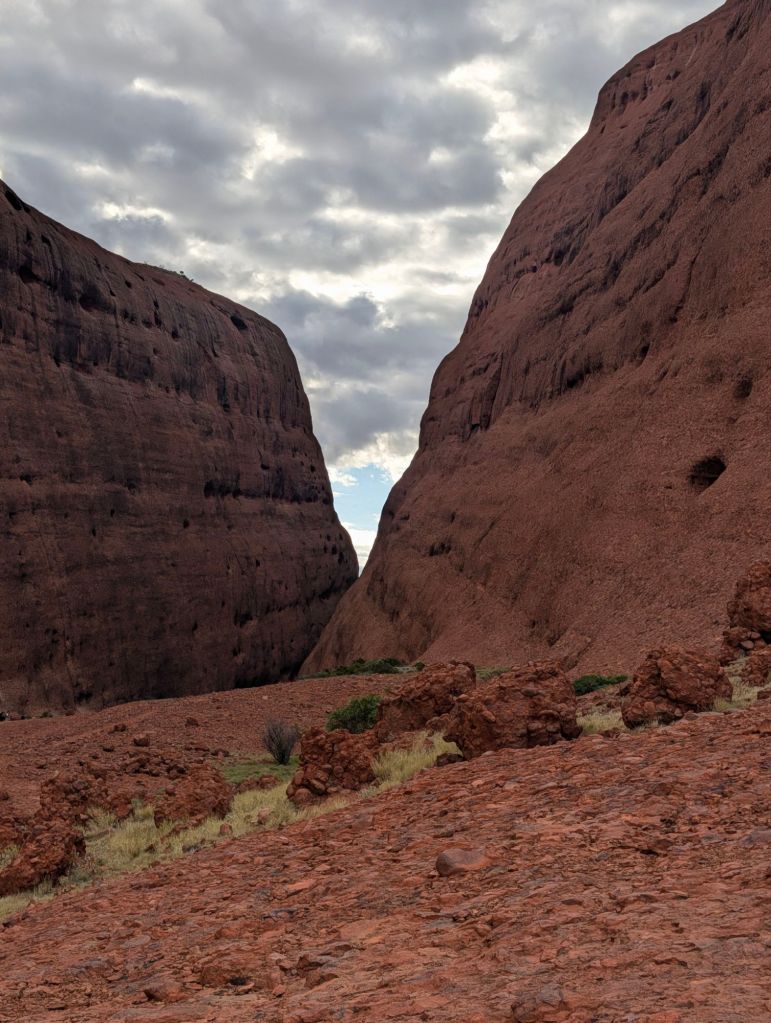
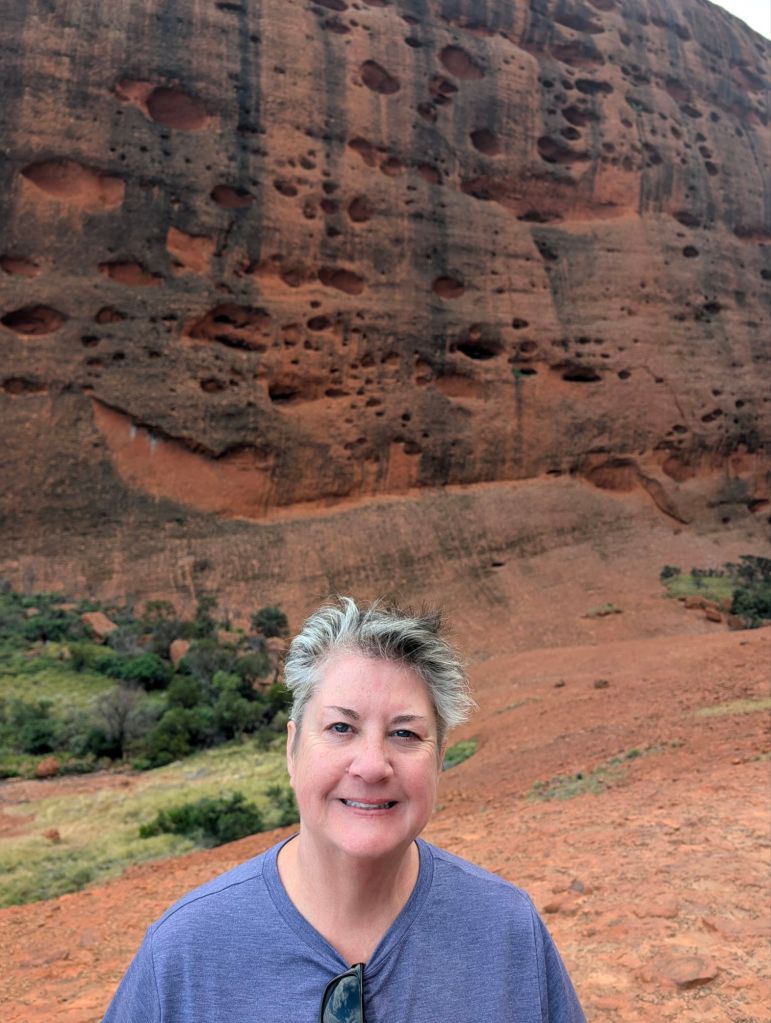
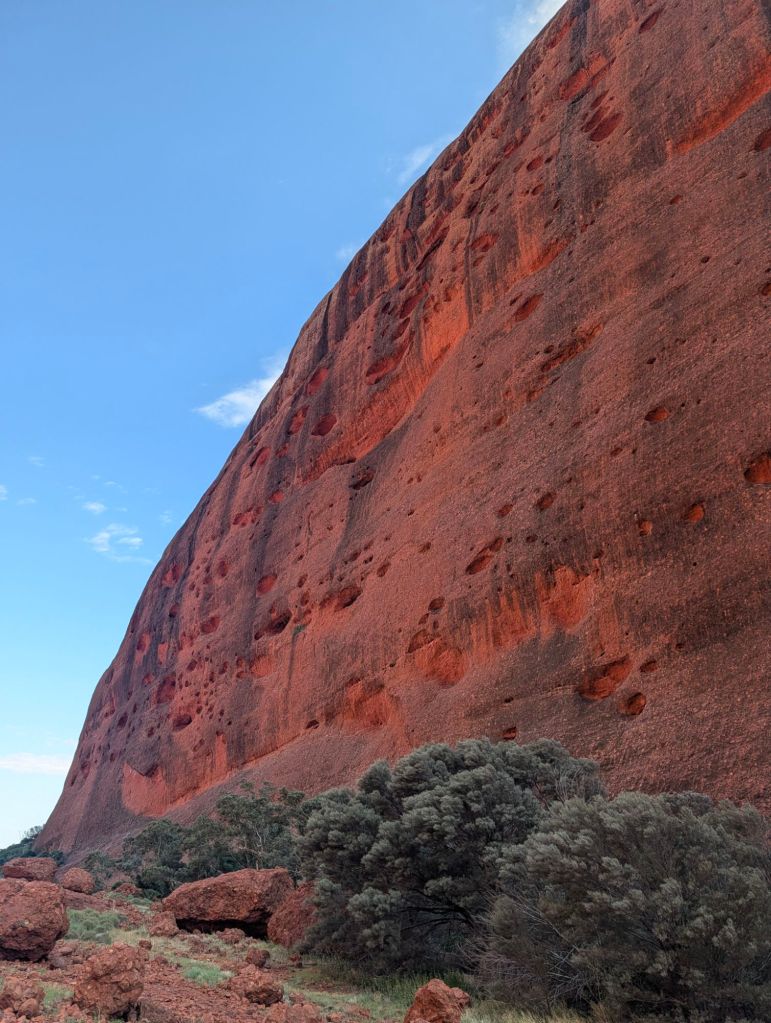
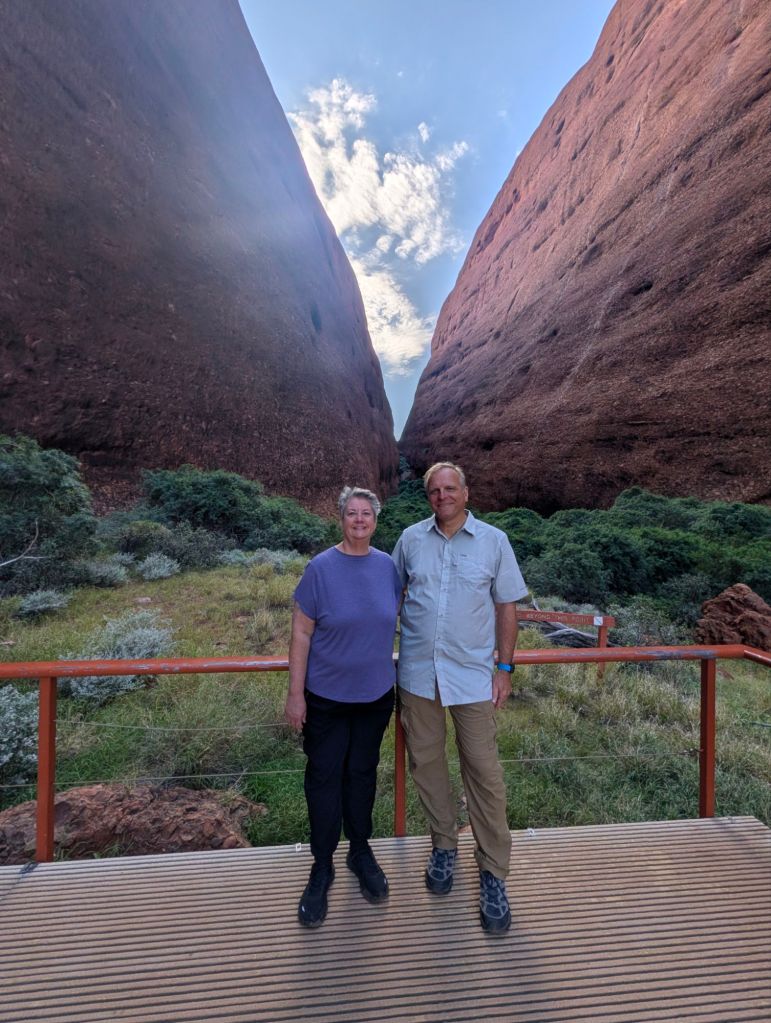
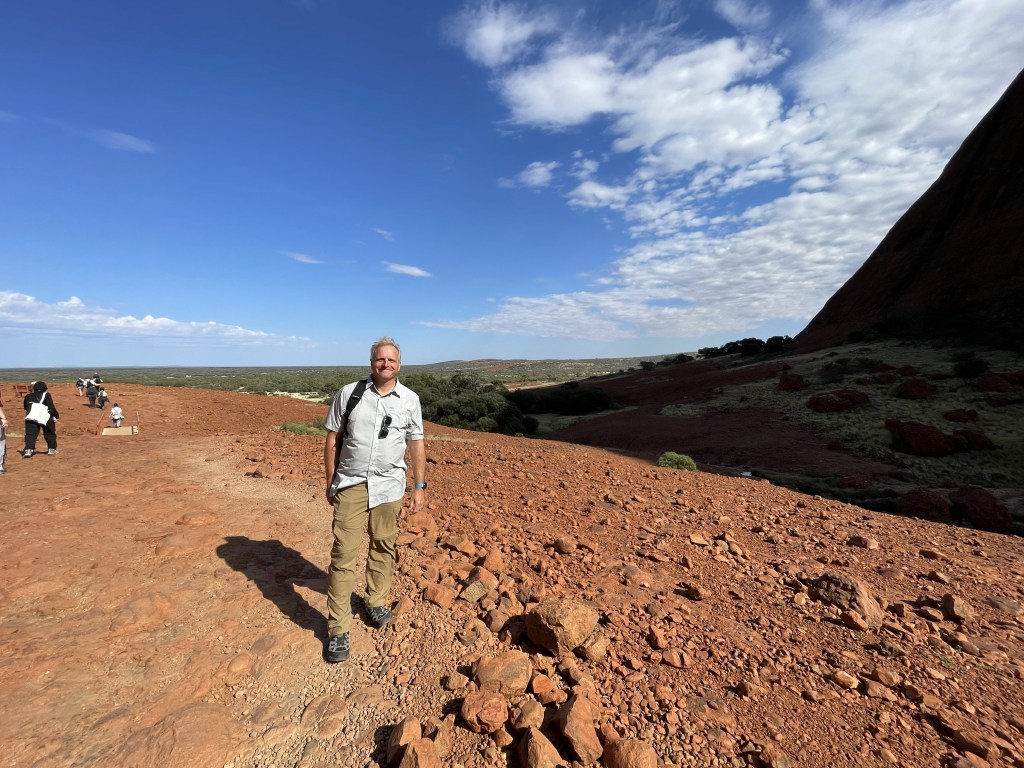
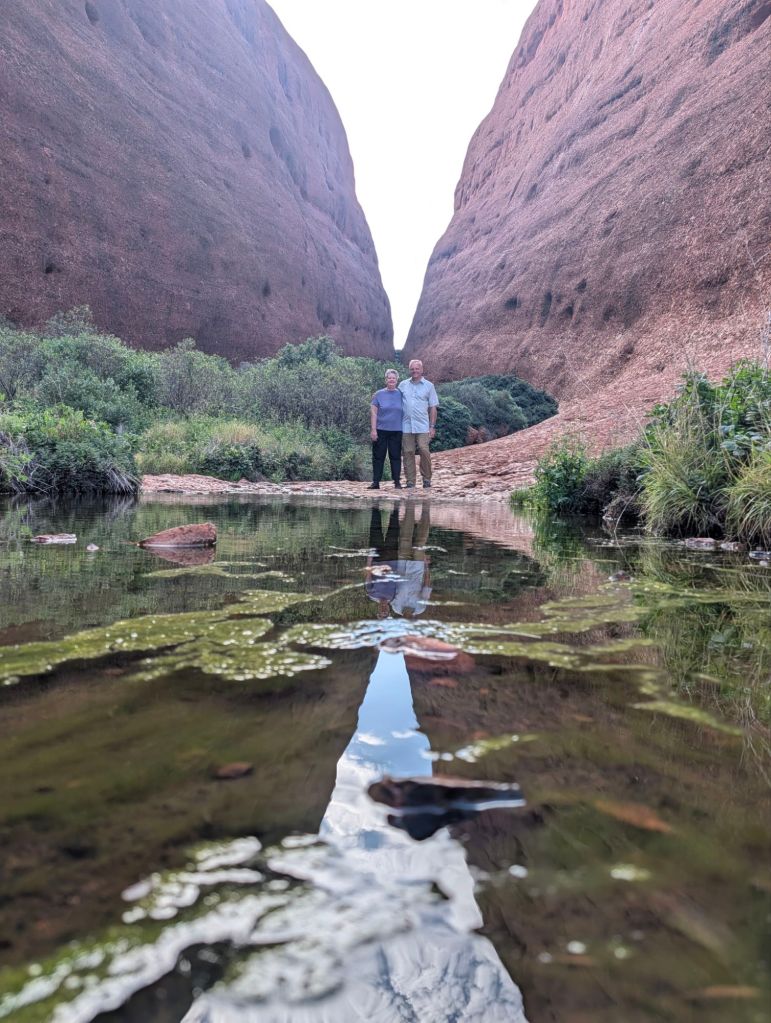
Our final stop was Kata Tjuta itself, where we hiked into the Walpa Gorge, a space between two of the main rocks. It was really breathtaking. In addition to the gorgeous rocks, the wildflowers are in bloom. We were also very lucky because there was a stiff breeze — enough to keep the nasty black flies at bay. Otherwise, we would’ve had to have worn our hats with fly nets attached to keep them out of our faces.

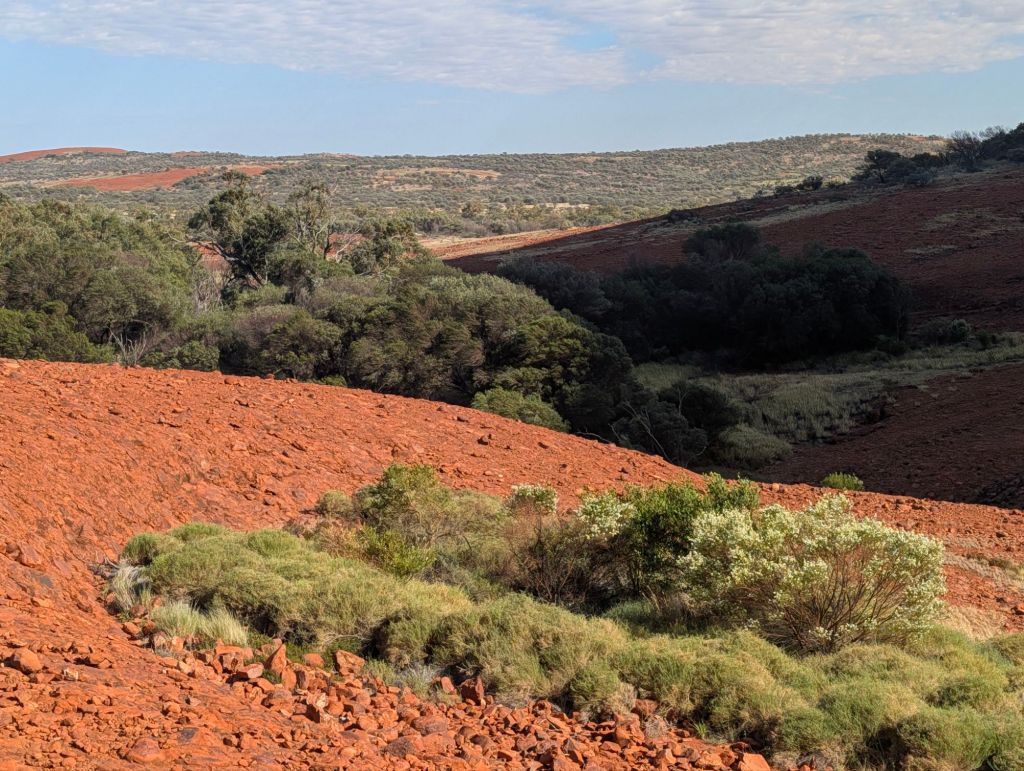
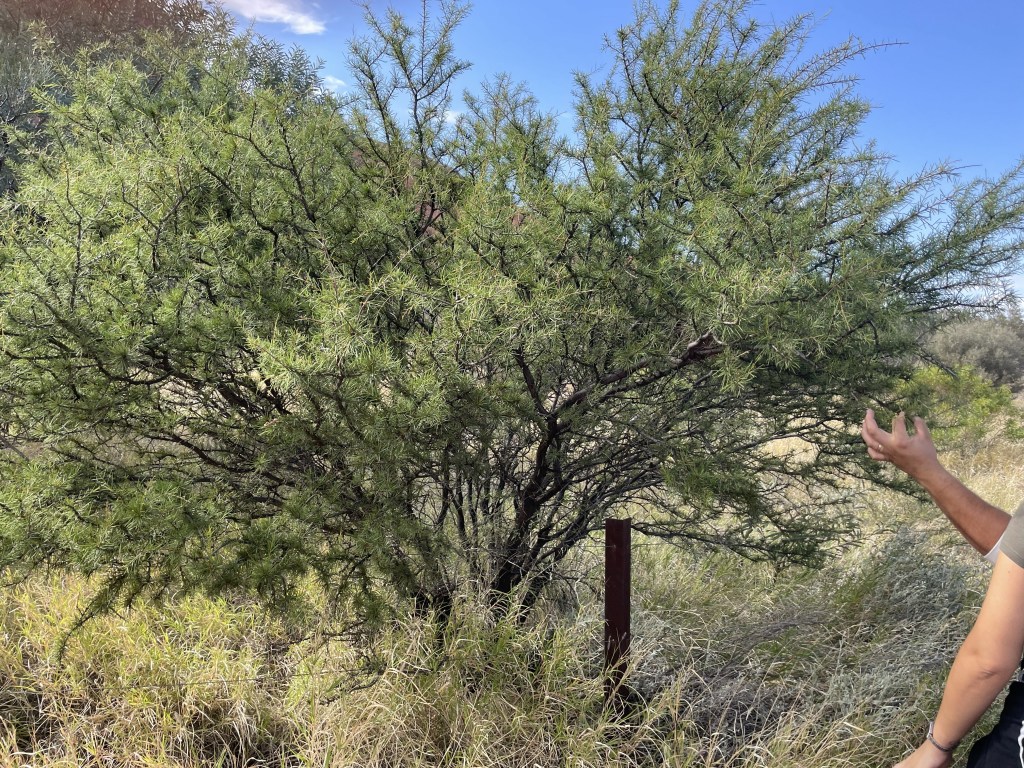
Fun fact: The tree below is nicknamed “Dead Finish” because it is the very last thing cows will eat; it is thorny and doesn’t taste very good, apparently. If the cows are eating the Dead Finish tree, you know there is a serious drought situation developing.
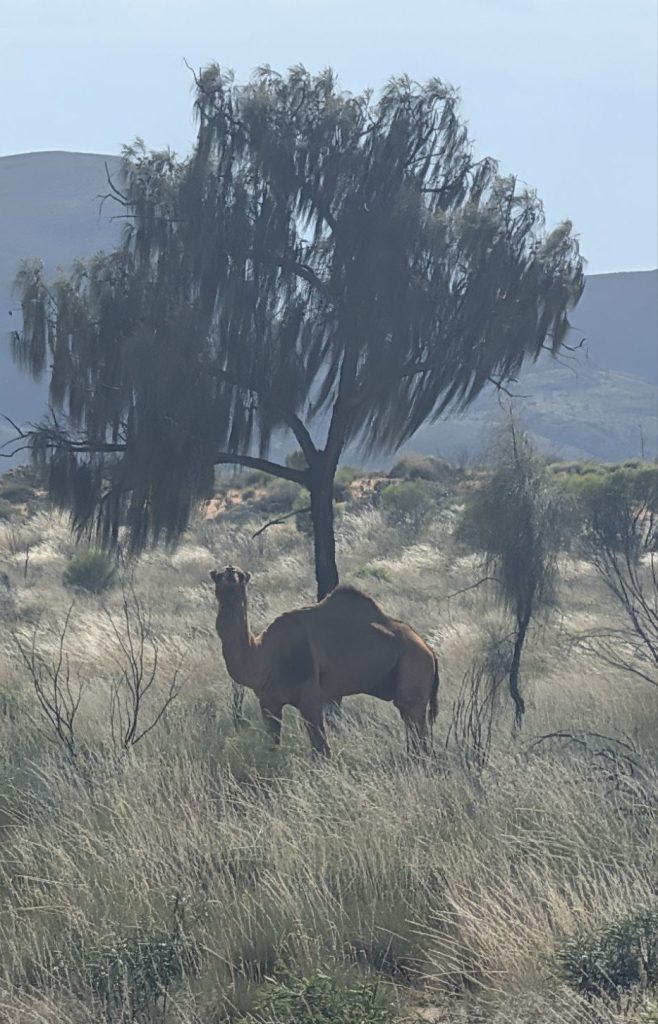
We thought that was the end of our adventures for the morning, but we were wrong. As we rode back to our resort, I told Rich I wasn’t so sure about that whole wild camel story and wanted to see one for myself. A few minutes later–yep!–WE ALMOST HIT A CAMEL ON THE SIDE OF THE ROAD!!! Poor Michael was pretty shaken up–the thing was giant, and seemed to come out of nowhere. We were going 80 km/h and all of a sudden the window on the left of the van was full of camel! Apparently sightings are pretty rare, because, to our delight, Michael turned the van around and went back to find it. I thought we would see kangaroos, wallabies, maybe a koala or two, and even some penguins, but I did not have camels on my Australian animal bingo card!
After our exciting morning, we walked around the “town” and checked out the shops there. We then had some time to relax before our evening excursion, which was a trip to Wintjiri Wiru, which is a drone and laser show in the desert.
Wintjiri Wiru is truly one of the coolest things we have ever seen. It uses lasers, projectors, and over 1200 drones to tell one of the Anangu people’s traditional stories.
In the Anangu culture, the traditional knowledge, law, and stories are not available to everyone; the right to the knowledge has to be earned over one’s life by demonstrating maturity and a respect for and connection to the culture. There are harsh punishments for sharing stories and information outside of the rules. There are some stories and information only available to women, some only to men, and only a few of their stories may be shared with outsiders. Those are the stories that are traditionally shared with children (who presumably can’t be fully trusted to keep them secret). There is no written form of their traditional language (now they have four languages, plus English), so the stories and knowledge was passed down orally for many thousands of years.
Wintjuri Wiru tells one of the shareable stories. They take great pride in the fact that each word in the narration of the show was chosen by a council of Anangu elders. It is told in the traditional language and then in English. The venue, which is just a few years old, was clearly designed to minimally interfere with the environment. It is simple and gorgeous.
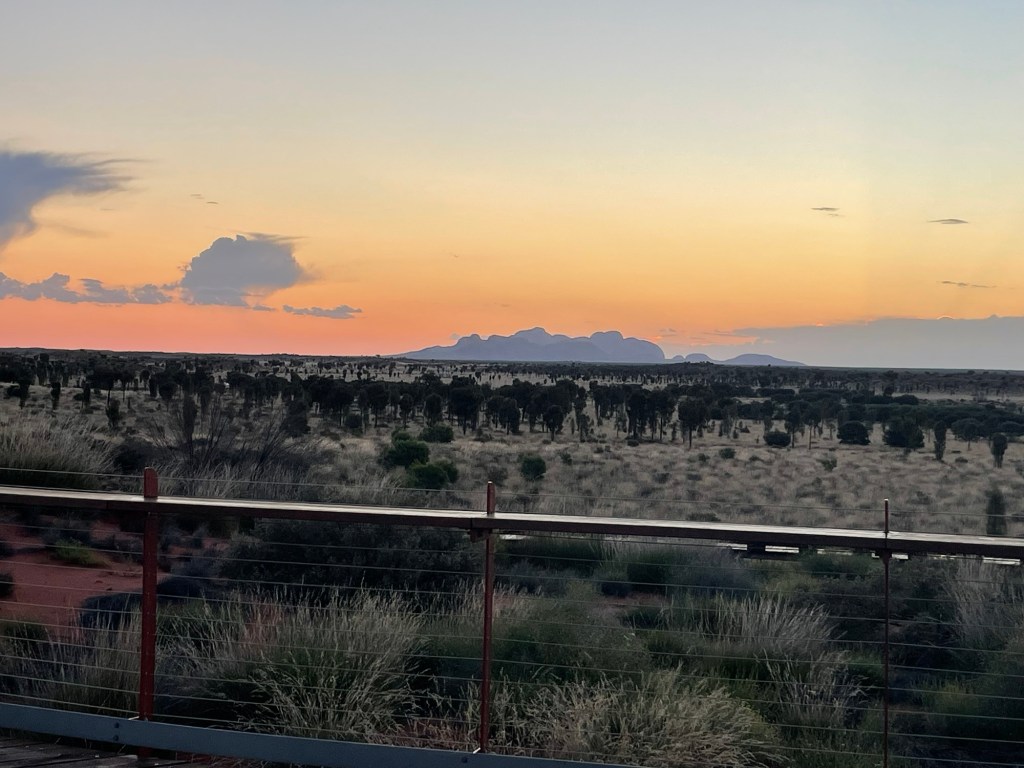
No photos are allowed during the show itself, so all we have is this photo of the drone wind test.
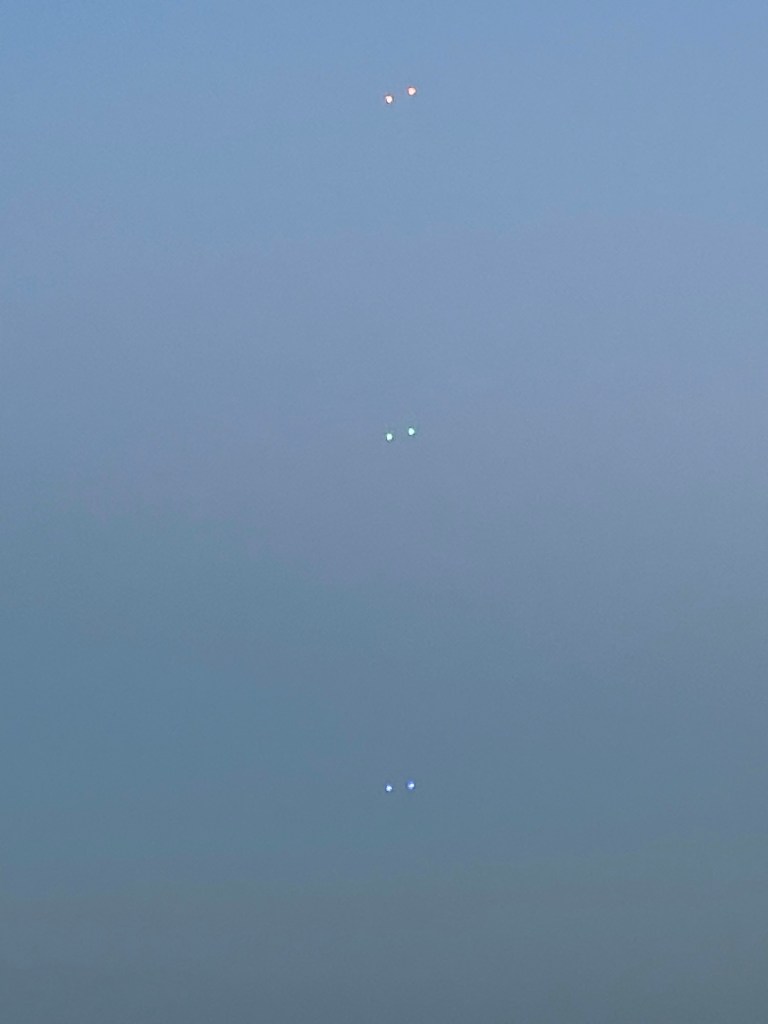
You’ll just have to take our word for it that the show is amazing–or come see it yourself!
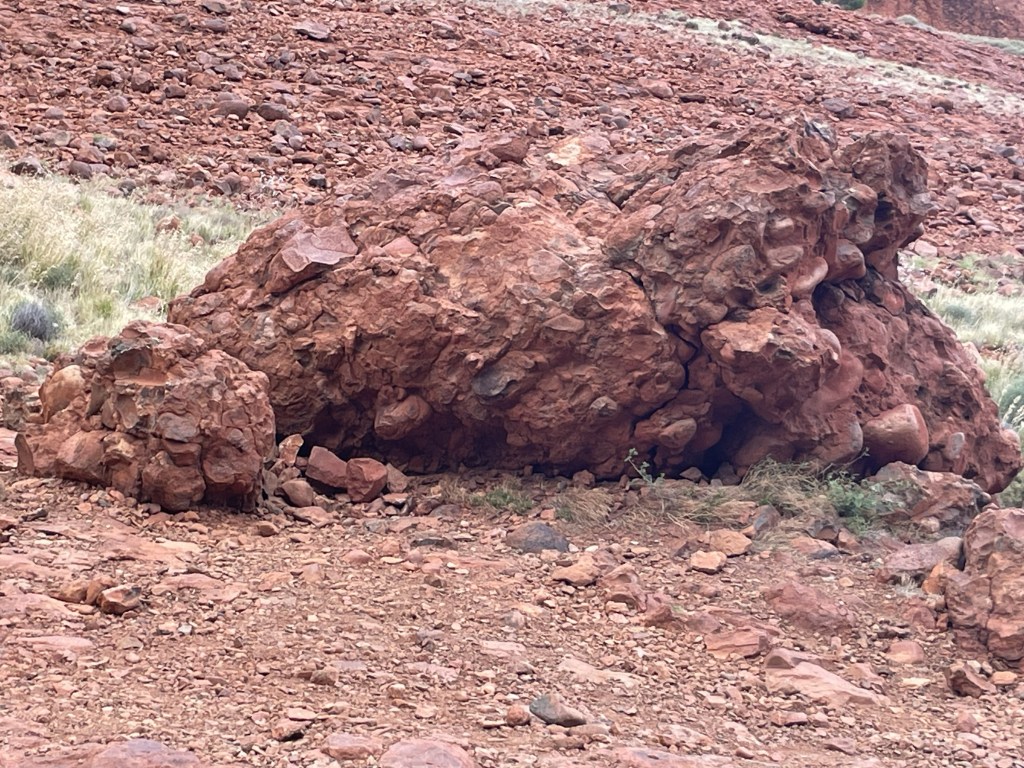
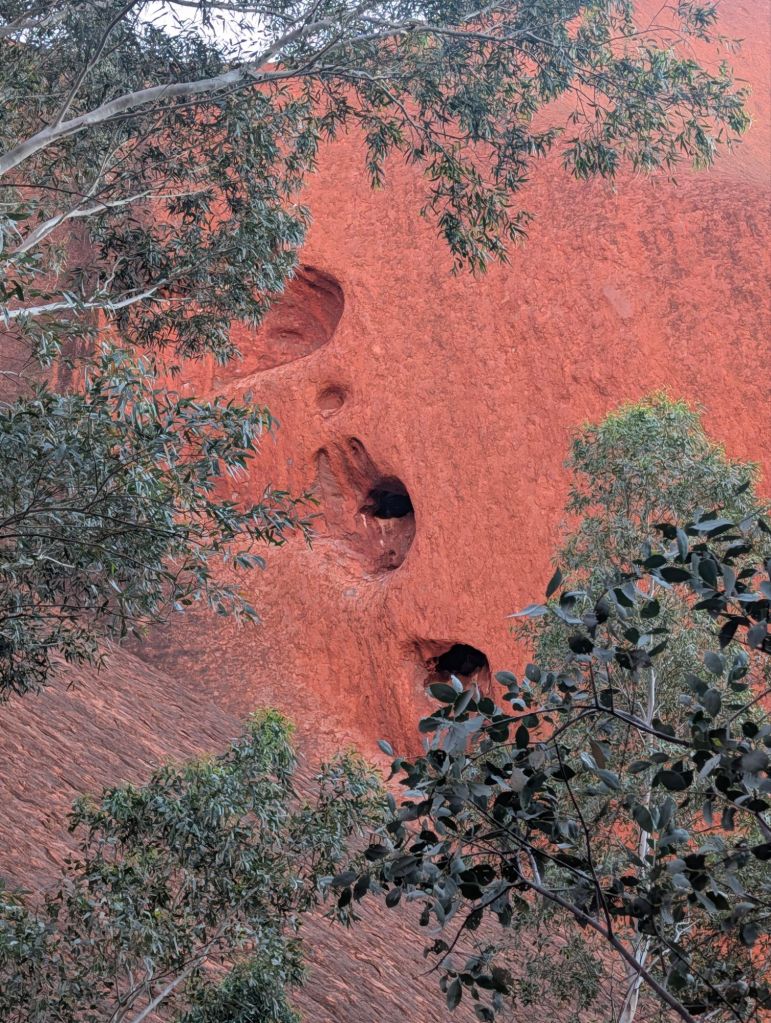
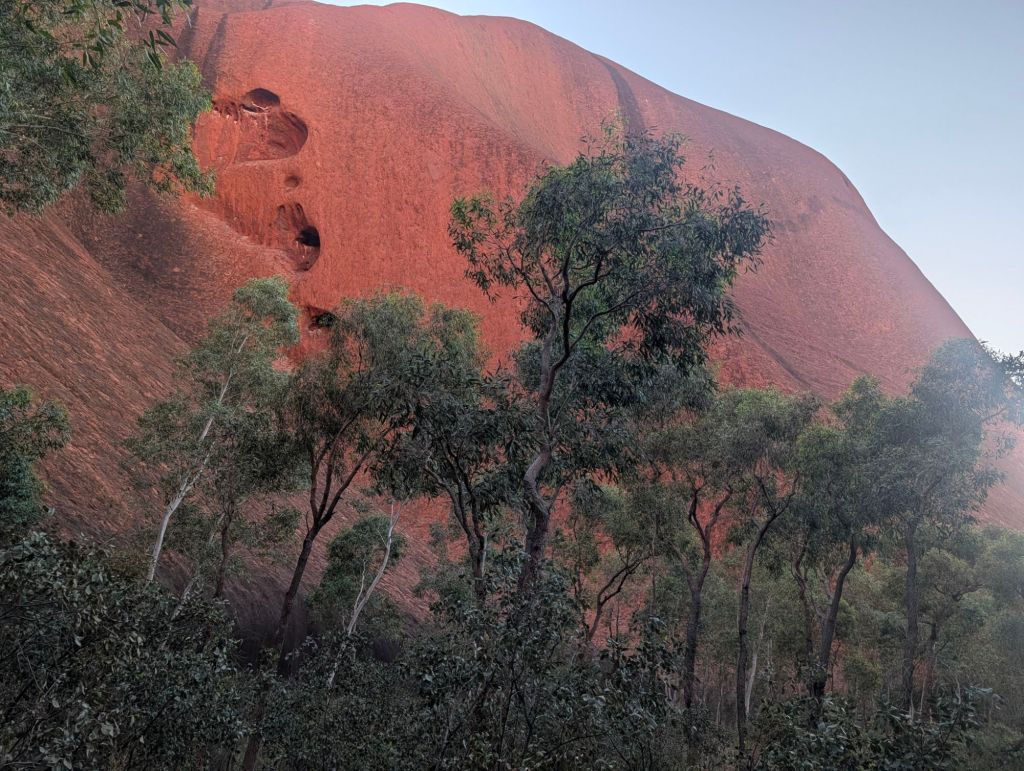
The story it tells is referred to as a creation story–but it is a story of the creation of Uluru, or, more specifically, a story explaining some of the physical characteristics of Uluru. It is known as the Mala story. The Mala people (ancestors of the current Anangu) traveled to Uluru to perform an inma–a sacred ceremony. Another tribe–the Wintalka–invited the Mala to join the Wintalka in their ceremony, but the Mala declined the invitation because the Mala ceremony had already begun and could not be stopped. This angered the Wintalka, who conjured an evil spirit to attack the Mala. The evil spirit was a shape shifter who took many forms as it traveled to Uluru. The Kingfisher Woman was the first of the Mala to notice the evil spirit and tried to warn everyone, but they ignored her until it took the form of an evil dog named Kurpany and they all saw it for themselves. Kurpany killed most of the Mala men, but spared the women and children. Kurpany left his paw prints on Uluru. We took these pictures of what we think are those paw prints.
I hope you enjoyed this long post–we learned a lot today and I thought you might be as interested as we were to learn something about what is widely thought to be the oldest continuous culture on earth.


Leave a comment